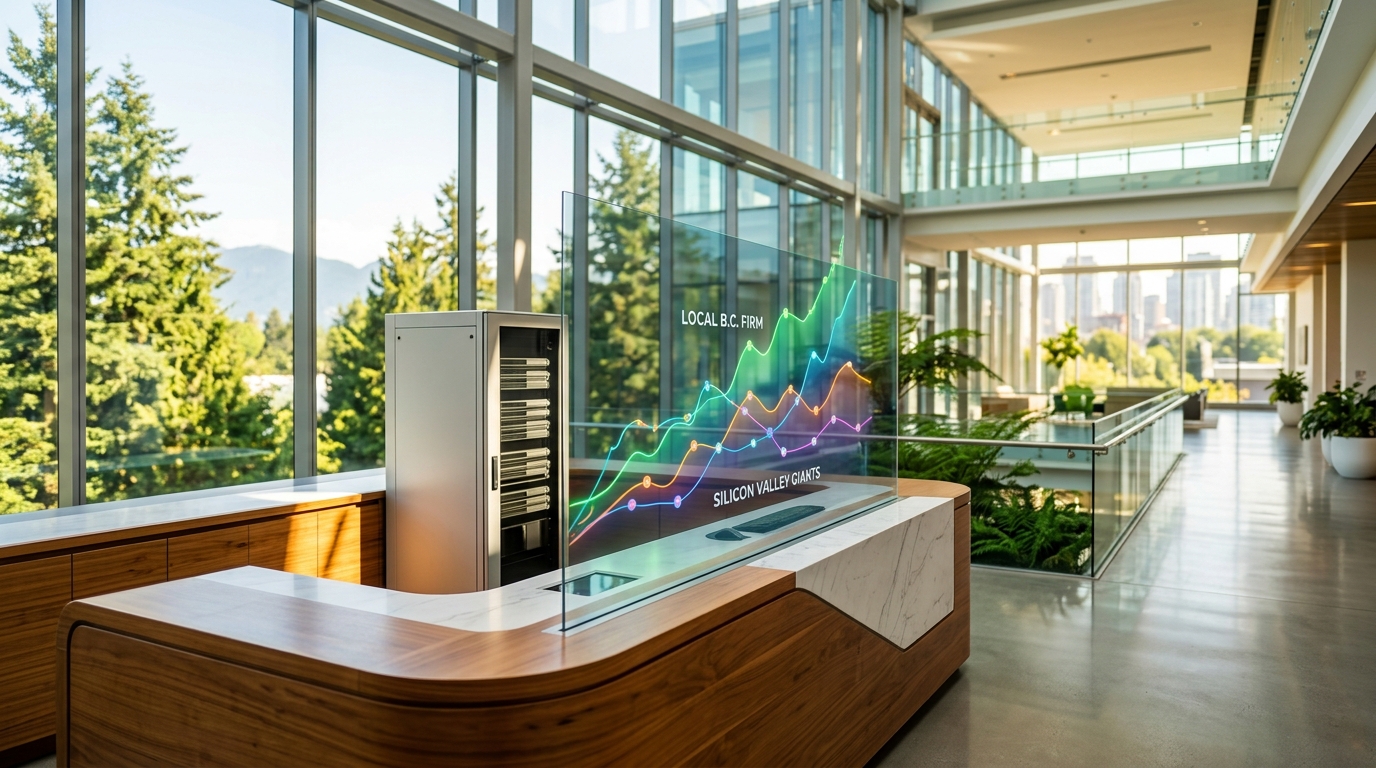
Canada committed $360 million over seven years to its National Quantum Strategy in 2023. Vancouver’s quantum ecosystem celebrated. Then Photonic Inc. closed a major funding round — one of the largest in Canadian history — and the momentum grew. The challenge now is bridging the gap between federal dollars flowing in and spinout companies flowing out.
Simon Fraser University’s quantum-photonics research expansion in Burnaby is a structural answer to that gap, provided the commercialization infrastructure keeps pace with the science. The university is building applied research capacity that extends beyond training physicists for roles in California. The question remains whether that infrastructure is mature enough to anchor companies in British Columbia.
A research university that produces talent is a pipeline. A research university that produces spinouts, licenses intellectual property, and seeds local supply chains is an ecosystem anchor. SFU is aiming for the latter. The distance between those outcomes is measured in tech transfer offices, proof-of-concept funding, and the willingness of provincial investors to commit capital before a company secures a Silicon Valley term sheet.
SFU’s Quantum Algorithms Institute, based in Surrey, sits at the intersection of theoretical and applied research. Its mandate explicitly includes commercialization. Canadian universities have a history of world-class research that is licensed internationally because domestic commercialization pathways are often too slow or risk-averse. Quantum is not immune to that pattern.
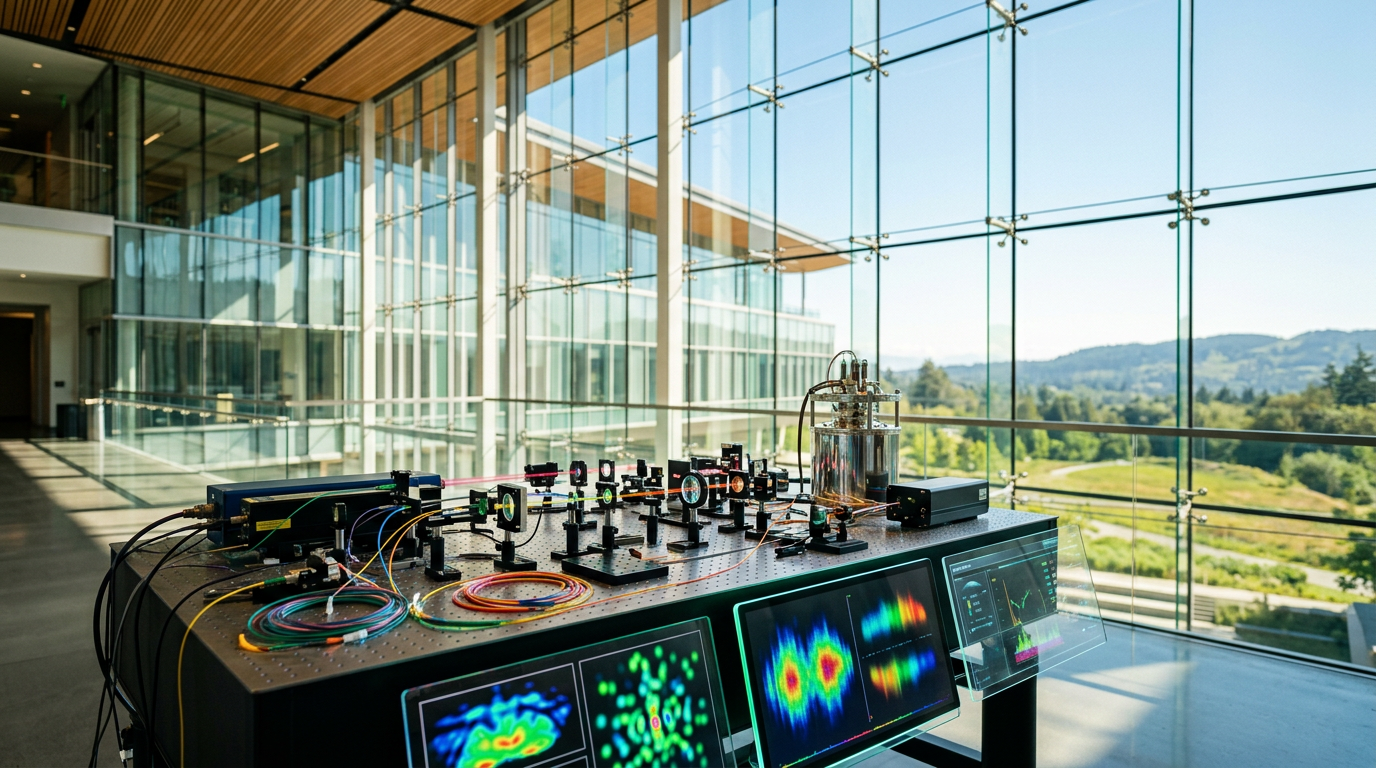
The photonics angle is critical for supply chain development. Photonic quantum computing — the approach pursued by Photonic Inc. and an area of deep expertise at SFU — requires specialized components such as waveguides, detectors, and integrated photonic chips. Currently, much of this supply chain runs through the United States, Japan, and Europe. A Burnaby-anchored research cluster with active commercialization could seed the Canadian suppliers that a maturing quantum industry requires.
Innovate BC has identified quantum technology as a priority sector, and its Ignite program has supported early-stage deep-tech companies. However, early-stage support and the growth-stage capital required to keep a quantum spinout in BC are distinct instruments solving different problems.
The retention challenge is well-documented in adjacent sectors. BC’s life sciences ecosystem has seen promising companies relocate to San Diego or Boston when they required Series B capital and proximity to U.S. markets. Quantum faces a similar gravitational pull: the largest customers — defence contractors, financial institutions, and national labs — are disproportionately American. Founders follow the customers.
SFU’s expanded lab infrastructure extends the window during which a spinout can develop in BC. More sophisticated equipment and applied research partnerships allow a company to advance further along the development curve before it needs to consider relocation. While not a guarantee of retention, it shifts the calculus.
SFU’s technology transfer office, operating under the SFU Innovates umbrella, manages the licensing and spinout pipeline. While deep-tech timelines mean the quantum pipeline remains early-stage, commercialization revenue figures from the office provide a metric for economic activity.
The BC Tech Association has advocated for provincial retention strategies tailored to deep-tech companies, recognizing that standard startup support—often built for software businesses with faster revenue timelines—does not map cleanly onto hardware and quantum companies with five-to-ten-year horizons.
Burnaby hosts a quiet concentration of photonics and advanced manufacturing capacity. This industrial geography—proximity to SFU, access to BCIT’s technical workforce, and competitive commercial real estate—is an underappreciated asset for quantum hardware companies that require lab space and skilled technicians.
SFU’s lab expansion is the infrastructure that determines whether local breakthroughs become a chapter in a longer story about a genuine quantum cluster. The difference lies in commercialization capacity, retention capital, and the willingness to treat quantum as a supply chain story. BC has the science; the structural question is whether it builds the rest.