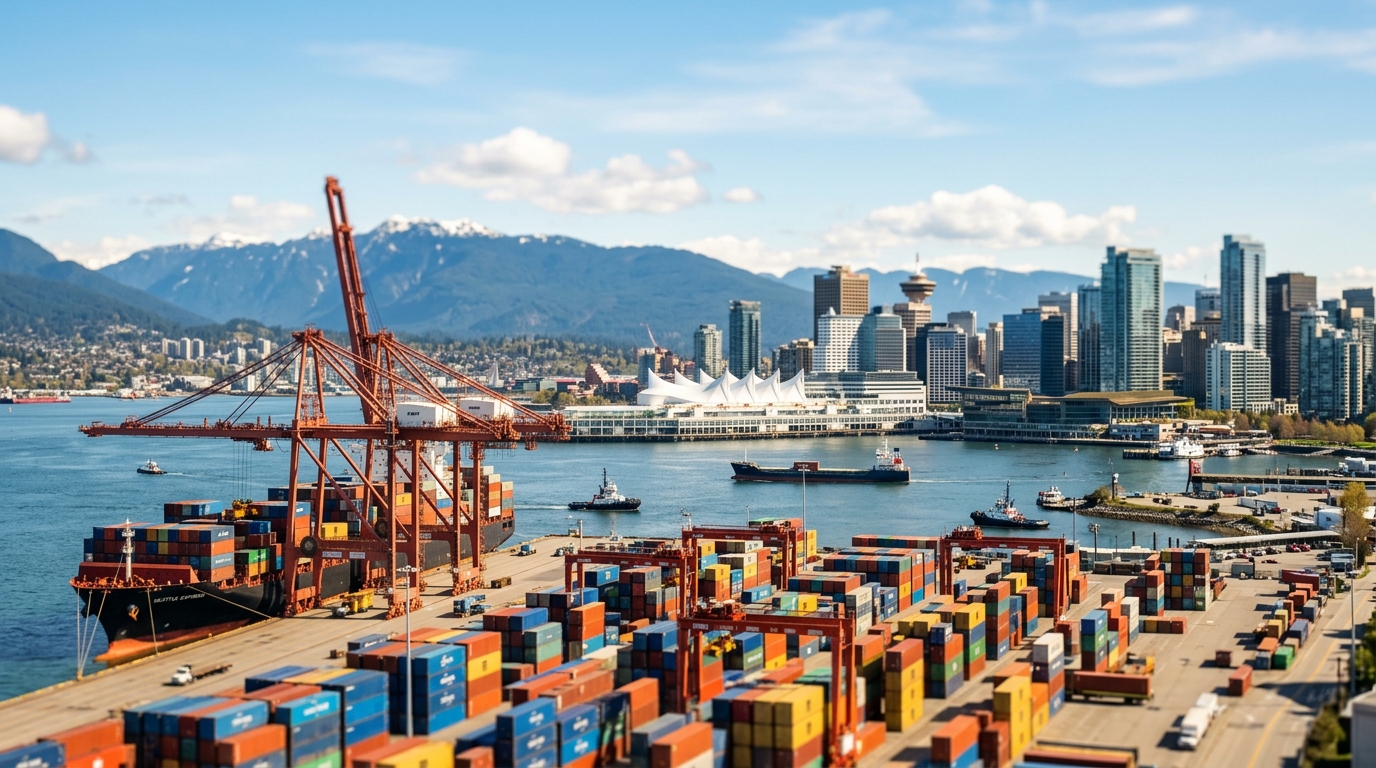
The countdown is concrete: six weeks from today, BC Place will host its first FIFA World Cup 2026 group-stage match, and Metro Vancouver will absorb a surge of international visitors unlike anything the region has seen. Destination Canada estimates that Canada’s two host cities—Vancouver and Toronto—will collectively generate more than $500 million in tourism spending. Vancouver’s share, anchored by seven group-stage and knockout matches at BC Place, is projected to be the largest of the two.
That is the headline. The operational reality underneath it is more complicated—and for Metro Vancouver businesses, more actionable.
Three infrastructure systems are simultaneously under pressure: YVR’s passenger throughput capacity, TransLink’s peak-load headroom, and the city’s thinned short-term rental supply. Each bottleneck creates a constraint. Each constraint, mapped correctly, creates a competitive opening for operators who move in the next six weeks.
YVR: Record Volume, Finite Runway
Vancouver International Airport handled a record 26.4 million passengers in 2024—a number that already tested daily processing capacity during peak summer travel. FIFA’s peak arrival and departure windows, concentrated around match days in early and mid-July, are projected to push daily throughput toward those limits again, with the added complexity of international visitors arriving in compressed waves.
The practical consequence for travellers: longer customs and ground transportation queues, tighter connections, and elevated uncertainty around arrival times. For operators, this is a signal. Ground transportation businesses—private car services, shuttle operators, and accessible transport providers—that pre-position capacity and communicate reliable pickup windows directly to incoming visitors will capture demand that airport queues cannot efficiently redirect. Hotels within a 15-minute drive of YVR, many of which have historically traded at a discount to downtown properties, are likely to see that gap narrow sharply as delayed or fatigued travellers prioritise proximity over location.
TransLink: Capacity Is Not the Problem. Predictability Is.
TransLink has filed operational plans for FIFA match days that include service increases on the Canada Line, Expo Line, and key bus corridors feeding BC Place. On paper, the system can move the numbers. The vulnerability is not aggregate capacity—it is the predictability gap that emerges when 50,000-plus fans with limited local knowledge attempt to navigate an unfamiliar transit network simultaneously.
Businesses that solve the information problem—wayfinding apps, multilingual transit guides, or concierge services that build transit routing into guest communications—are positioned to capture loyalty from visitors who would otherwise default to expensive ride-share options. Restaurants and retailers within a 10-minute walk of Stadium-Chinatown and Main Street-Science World stations are sitting on a natural advantage; those who have not yet built match-day staffing and inventory plans around the TransLink schedule are leaving revenue on the table.
The broader transit constraint also affects workers. Hospitality and service businesses relying on staff who commute from Surrey, Burnaby, or the North Shore should model extended commute times on match days and consider shift-time adjustments now, before the schedule is locked.
The Short-Term Rental Crunch: A Supply Story With Two Sides
Enforcement tightening of Vancouver’s short-term rental registry since 2023 has reduced Metro Vancouver’s licensed STR stock by roughly 30% compared to pre-enforcement levels. That contraction, which returned units to the long-term rental market, has an acute consequence for a major international event: there is less accommodation inventory than there was the last time the city hosted a comparable influx.
The BC Hotel Association has flagged occupancy forecasts approaching full capacity for downtown Vancouver properties during peak FIFA match weeks, with average daily rate premiums expected to run significantly above baseline summer levels. That is a benefit for hoteliers who locked in dynamic pricing structures early, but a complication for event organisers, corporate travel managers, and visitors booking late.
The opportunity side of the STR story belongs to operators in submarkets that visitors may not have considered. Suburban hotel properties in Richmond, Burnaby, and New Westminster—all with rapid transit connections to BC Place—are the most direct beneficiaries of downtown saturation. As this publication reported earlier this month, many suburban operators have been slow to adjust their pricing and marketing posture to capture overflow demand. Six weeks is enough time to correct that.
The Sectors Positioned to Win
Beyond accommodation and transport, the revenue opportunity extends across a wider ecosystem. Translation and multilingual services are undersupplied relative to the expected visitor mix. Food and beverage operators near BC Place who can serve extended hours, manage high-volume turnover, and communicate menus in multiple languages are well-placed. Experiential tourism operators offering day trips to Whistler, the Sea-to-Sky corridor, and the Gulf Islands have a captive audience of visitors with extra days built around match schedules.
Currency exchange, international SIM and eSIM retail, and luggage storage services are high-demand categories that tend to be under-resourced at peak moments. Operators in those categories who increase visibility—physical signage near transit hubs or Google Business listings updated for FIFA-related search terms—will capture walk-in demand that would otherwise go unmet.
The Kitchen Table Version
If you run a business that touches visitors in any way, the next six weeks are your preparation window. The revenue window opens July 2 and runs through the knockout rounds. The operators who will outperform are those who have already mapped the specific bottlenecks: where visitors will be stuck, what they will need, and who is positioned to provide it. Infrastructure gaps are not just problems for planners. For businesses paying attention, they are a clear competitive signal.



