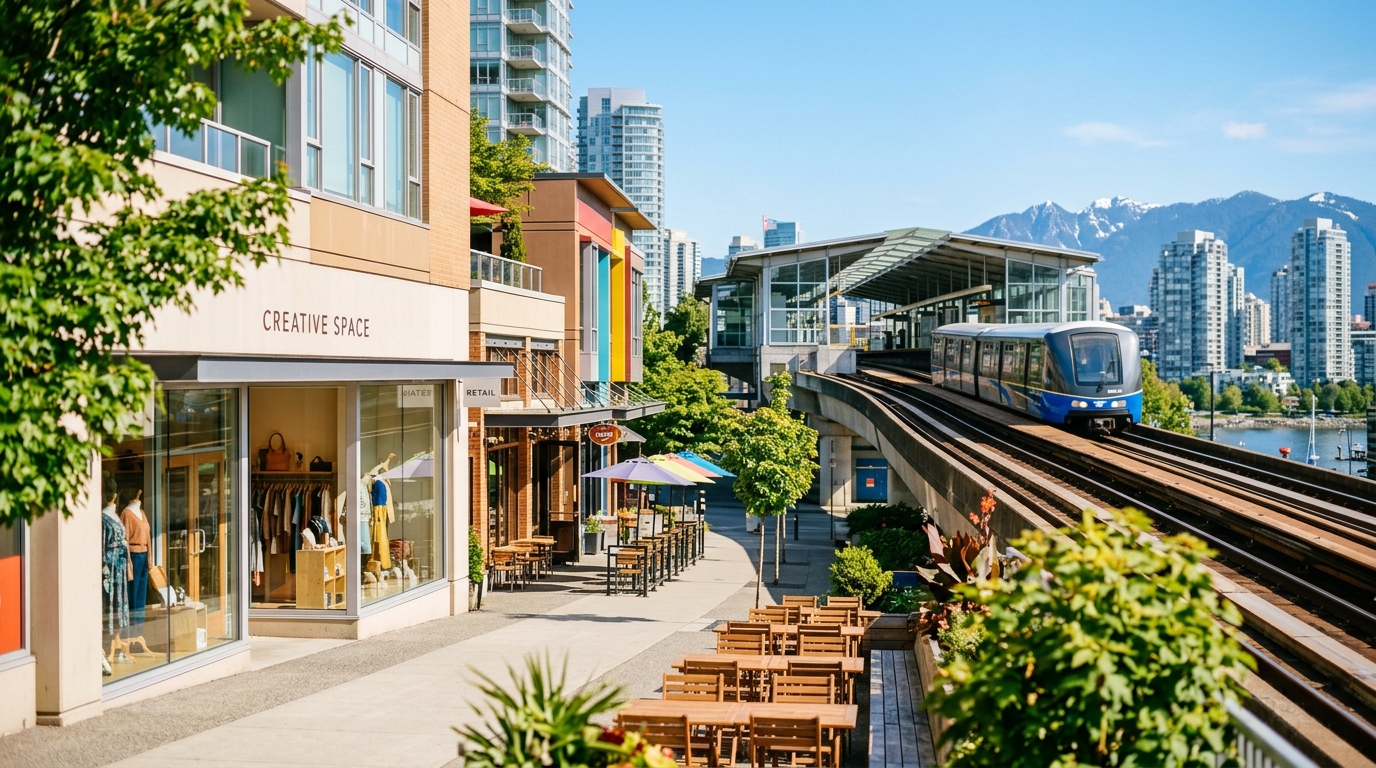
Walk the ground-floor retail strip along Broadway between Cambie and Oak on any weekday morning and the "for lease" signs are gone. Bubble tea shops, physiotherapy clinics, and fast-casual lunch counters have returned, and landlords are no longer offering the concessions common in 2022. The reason is foot traffic: SkyTrain ridership is rebounding, and retail rents are following.
TransLink's 2025 annual report showed SkyTrain ridership approaching 90 per cent of pre-pandemic levels. Q1 2026 data suggests the recovery is accelerating, with the system on a trajectory to reach baseline levels by year-end. This recovery is fundamentally altering the commercial real estate landscape along the Expo, Millennium, and Canada lines.
The Vacancy Gap
Metro Vancouver's broader retail market has experienced a slow, uneven recovery, but the picture is different near transit. Colliers' Q1 2026 Metro Vancouver retail leasing data indicates that ground-floor retail within 500 metres of a SkyTrain station is compressing vacancy faster than the regional average. The gap between transit-proximate and transit-distant retail is widening.
Three nodes stand out. At Broadway-City Hall, asking rents have surpassed 2019 levels, driven by the Broadway Extension and densification along the City of Vancouver's Broadway Plan corridor. At Metrotown, aggressive rezoning and sustained foot traffic have kept vacancy near historic lows. Brentwood shows a similar trend, with redevelopment creating a captive retail catchment. CBRE's Q1 2026 retail market data confirms that asking rents in high-performing transit nodes are running ahead of the Metro Vancouver average.
The Broadway Extension Window
The Broadway Extension—which will add six new stations including Great Northern Way-Emily Carr, Mount Pleasant, and Fairview-VGH—is the most significant near-term catalyst. Once the extension opens, it will connect a high-income corridor to the network, changing the retail calculus for surrounding blocks.
Retailers who secure leases before the extension opens negotiate from a position of relative leverage. Once foot counts are established, that leverage shifts to landlords. The Broadway Plan's commercial zoning provisions mandate ground-floor commercial uses, limiting the supply of retail space and providing structural support for rents.
Strategic Considerations
For retailers, transit adjacency is now a quantifiable demand driver. High-frequency, lower-ticket businesses—such as coffee shops, quick-service food, and personal services—benefit most directly. For investors, the velocity of lease-up at transit nodes relative to the broader market signals a potential widening of cap rate differentials.
Operators and investors who position ahead of the Broadway Extension's opening will likely benefit from current negotiating room. Those who wait for confirmed foot traffic data will likely pay a premium for the same locations.



