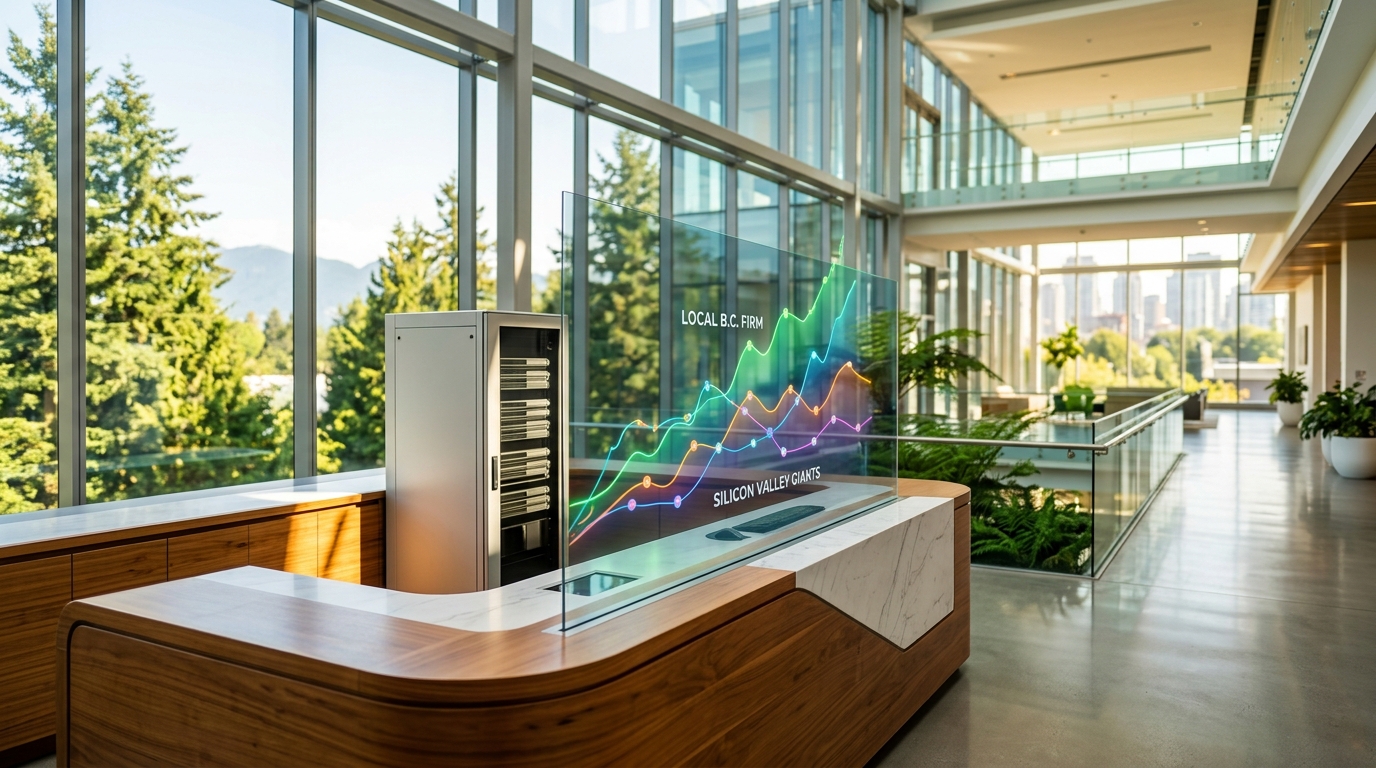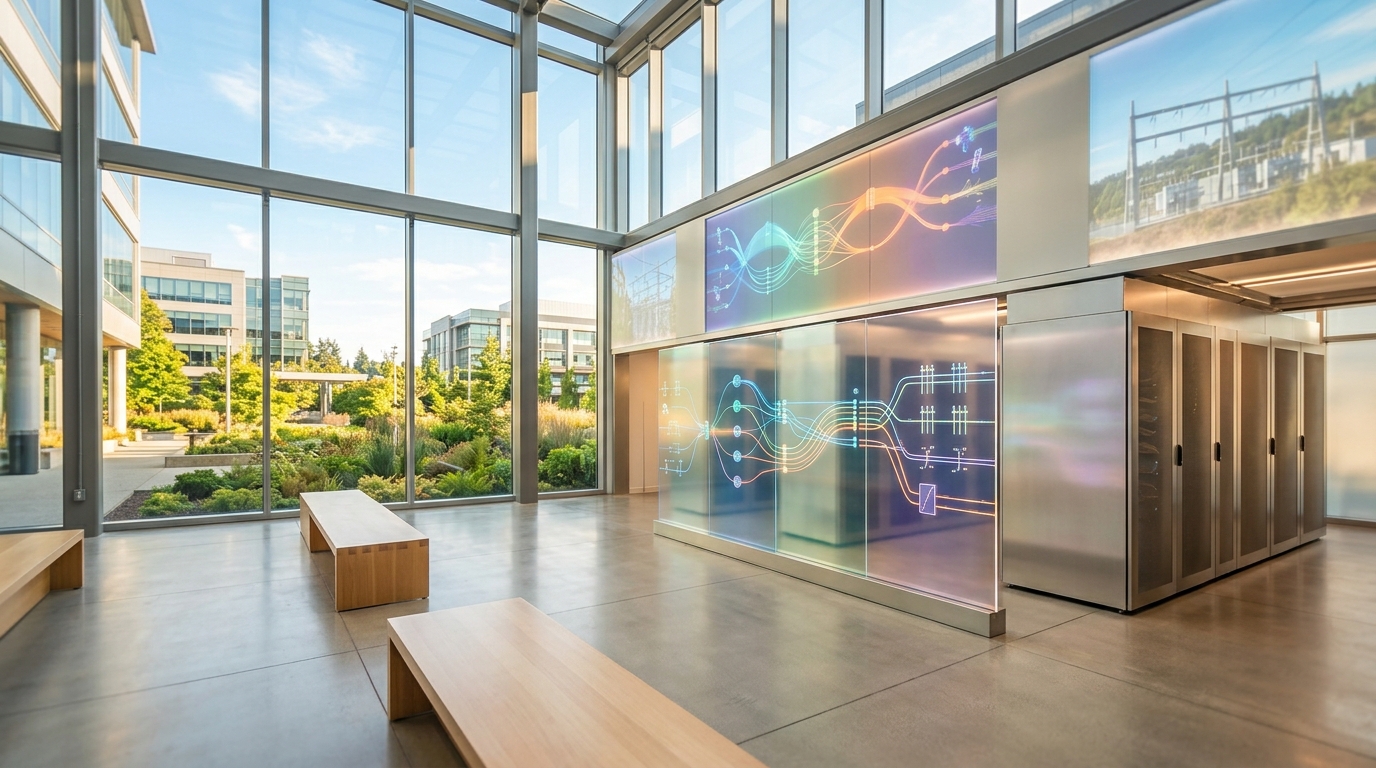
Power availability—not land or zoning—is now the binding constraint on Metro Vancouver's AI infrastructure boom. Several hundred megawatts of new large-load requests are currently sitting in BC Hydro's interconnection queue, with wait times for facilities without existing power commitments extending well into 2028. Land is available and capital is flowing, but the electrons required to power high-density compute are in short supply.
The AI infrastructure surge—driven by demand for GPU compute, model training, and hyperscale cloud capacity—has collided with the physical limits of BC Hydro's transmission network. The Sumas and Tilbury substations, which serve the industrial corridors of Abbotsford, Delta, and Surrey, are the primary chokepoints. Developers who treated power as a secondary utility concern are now finding it is the central hurdle to project viability.
This constraint is not temporary. BC Hydro's transmission expansion timelines are measured in years; a substation upgrade planned today will not energize until the early 2030s. Consequently, the window to secure capacity at existing infrastructure is closing, and operators who act now are effectively purchasing a durable competitive advantage.
BC Hydro's industrial electricity rates remain a primary draw for the region. These rates are structured around the province's hydroelectric base load, making them more cost-effective than thermal-heavy grids in Alberta. While Washington State offers competitive rates, Canada's evolving data residency rules make a Vancouver-adjacent location strategically necessary for many enterprise and government clients.
It is important to note that connection timelines vary by scale. While hyperscale facilities face significant transmission-level delays, smaller data centres requiring less than 5MW may experience different timelines depending on local distribution capacity.
Data centre permit applications in Metro Vancouver accelerated through 2025 and 2026, with Surrey and Delta absorbing the bulk of proposals. The volume of applications has outpaced the grid's immediate ability to absorb new load.
Successful operators are now securing power commitments before finalizing site acquisitions. This sequencing—grid capacity first, land second—represents a strategic shift in industrial real estate development, a trend noted by advisors at JLL and CBRE over the past 18 months.
For tech founders, colocation facilities that already hold BC Hydro capacity agreements have become scarcer assets than the physical square footage they occupy. While an informal secondary market for power commitments has emerged, it remains subject to BC Hydro's specific tariff rules regarding load transferability.
The provincial government's digital economy ambitions add urgency. With Ottawa’s $2-billion sovereign AI compute fund focusing attention on Canadian infrastructure, BC’s hydroelectric advantage is a central pillar of the province's investment pitch. Ensuring federal compute dollars align with grid connection timelines is a priority for provincial planners.
The outlook is clear: this is a supply-chain challenge with a finite resolution. BC Hydro will expand transmission capacity and upgrade substations. However, operators who lock in capacity commitments in the next 12 to 18 months will hold a structural cost and timing advantage. In a sector where first-mover advantages compound, securing a place in the queue is the most critical trade of the cycle.