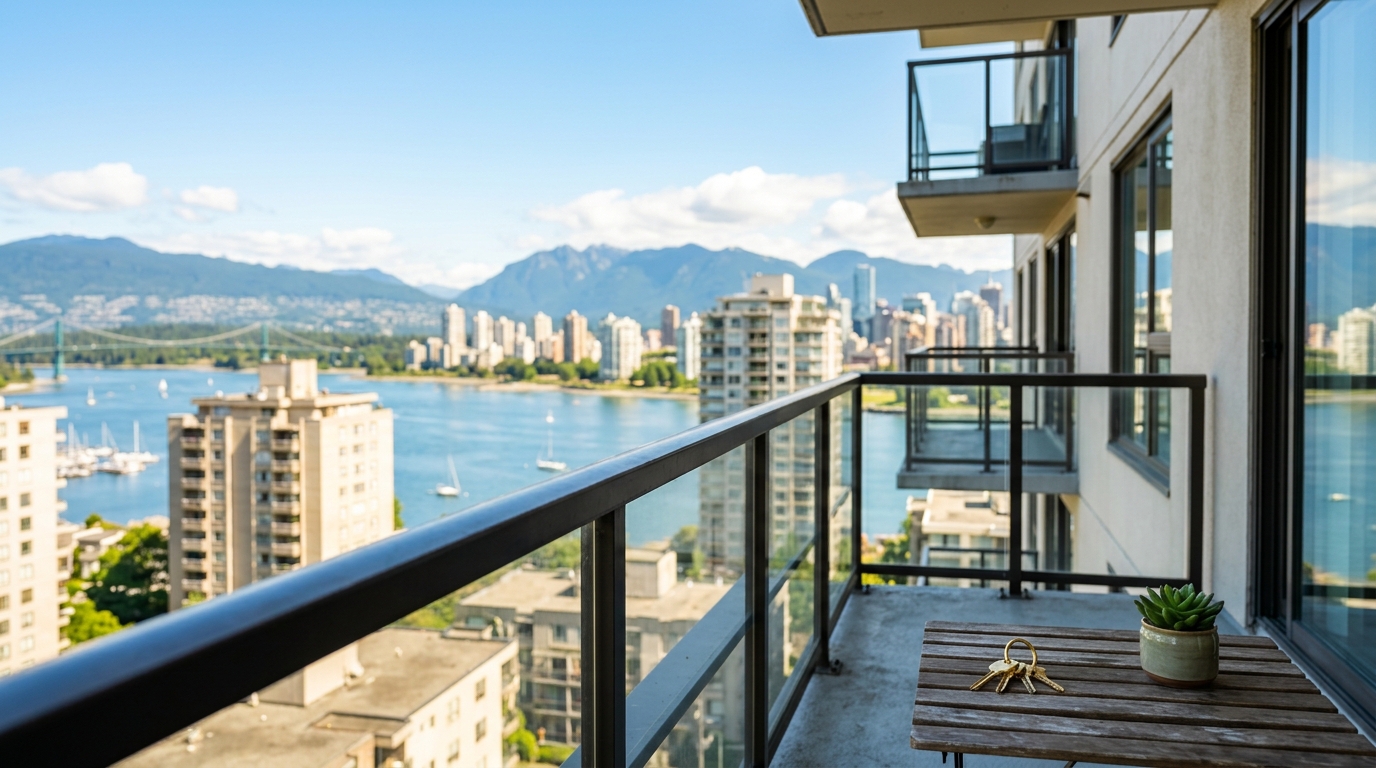
Picture a six-storey concrete building in Kitsilano, built in 1974. The lobby carpet is original, the elevator has been replaced twice, and strata fees have climbed steadily for a decade. A looming concrete remediation assessment is about to land in every owner's mailbox. Individually, each unit sells for what the market will bear—decent, but not transformative. Collectively, that building and its land could be worth considerably more to a developer with a vision for the site.
This logic is driving strata deconversion, a trend gaining traction across Metro Vancouver's aging residential stock.
Deconversion, or a strata wind-up, is the process by which a strata corporation collectively votes to dissolve, sell the entire property to a single buyer, and distribute the proceeds among owners. It became significantly more viable in July 2016 when the Province brought into force amendments to the Strata Property Act (introduced via Bill 40 in 2015). The change lowered the required owner vote threshold from 100 per cent to 80 per cent, transforming a legal near-impossibility into a workable exit strategy.
Under current legislation, at least 80 per cent of strata lot owners must vote in favour of a wind-up resolution. A court must then approve the process, ensuring that dissenting minority owners receive fair market value. The BC Law Institute, whose research informed these reforms, designed these court protections to balance collective benefit against the rights of holdouts.
The Age Profile of Metro Vancouver's Strata Stock
Demographic reality is creating a structural window for these transactions. A significant share of the region's strata buildings were constructed before 1990. These buildings are now 40 to 50 years old, approaching the lifecycle thresholds for major capital expenditures: envelope repairs, mechanical system overhauls, and energy efficiency upgrades required under evolving provincial building codes.
For owners, the calculus is shifting. Deferred maintenance depresses individual resale values, and special levies for major repairs can reach tens of thousands of dollars per unit. In many cases, the land beneath an aging low-rise is worth more than the sum of its depreciated parts—particularly in corridors where municipal densification policies have increased potential density.
The Condominium Home Owners Association of BC (CHOA) has tracked interest in wind-up proceedings since the 2016 legislative changes and noted a steady increase in inquiries from strata corporations. The association provides guidance to owners navigating the process, which requires legal counsel, an independent appraisal, and careful management of owner communications.
The Premium Question
The financial case for deconversion rests on a simple premise: consolidated land commands a premium. When a developer acquires an entire strata site in a single transaction, they eliminate the time, cost, and uncertainty of assembling individual lots.
That consolidation premium is the core value proposition for owners. Industry data from commercial real estate advisory firms suggests that owners in completed strata wind-ups have achieved meaningful premiums over comparable individual unit sales, though figures vary based on location, zoning, and market timing. Buildings within 800 metres of a SkyTrain station tend to attract the strongest developer interest, given the density permissions unlocked by provincial transit-oriented development legislation.
Proceeds are typically distributed on a unit entitlement basis—the same formula used for strata fee allocations—unless owners negotiate an alternative arrangement. Legal and appraisal costs are deducted from the sale proceeds before distribution.
The Developer and Investor Perspective
For developers and institutional investors, the appeal is structural. Metro Vancouver's geography—hemmed by ocean, mountains, and the Agricultural Land Reserve—means that developable residential sites in established, transit-served neighbourhoods are scarce. A strata wind-up offers a comparatively clean path to site control.
Commercial real estate brokers have noted growing institutional interest in strata deconversion, particularly from purpose-built rental developers and real estate investment trusts seeking to replace aging stock with higher-density buildings. An aging strata building on a well-zoned site is, in effect, a land play with a cash-flowing interim use.
The risks remain. Achieving 80 per cent owner approval is not guaranteed, and a failed vote can leave a strata corporation fractured. Buildings with a high proportion of investor-owned units tend to reach the threshold more readily than those with a large share of owner-occupiers, for whom the decision carries significant personal disruption.
The Bottom Line
Strata deconversion is not a mass-market phenomenon. The legal complexity, emotional stakes, and requirement for a supermajority vote mean that only a subset of aging strata stock will reach the threshold. But in the right corridor, it represents a compelling structural play that rewards owners willing to organize collectively.
For strata owners in aging buildings, the question is worth asking before the next special levy notice arrives: what is this land worth to the right buyer? The answer may be more than the sum of its units.
What to watch: The number of strata wind-up applications filed with the Land Title and Survey Authority of BC has grown since the 2016 legislative changes. Legal practitioners expect that pace to accelerate as more of the pre-1990 building cohort reaches critical maintenance inflection points. Municipal rezoning decisions will be the key variable determining which corridors see the most activity in the next 24 months.



