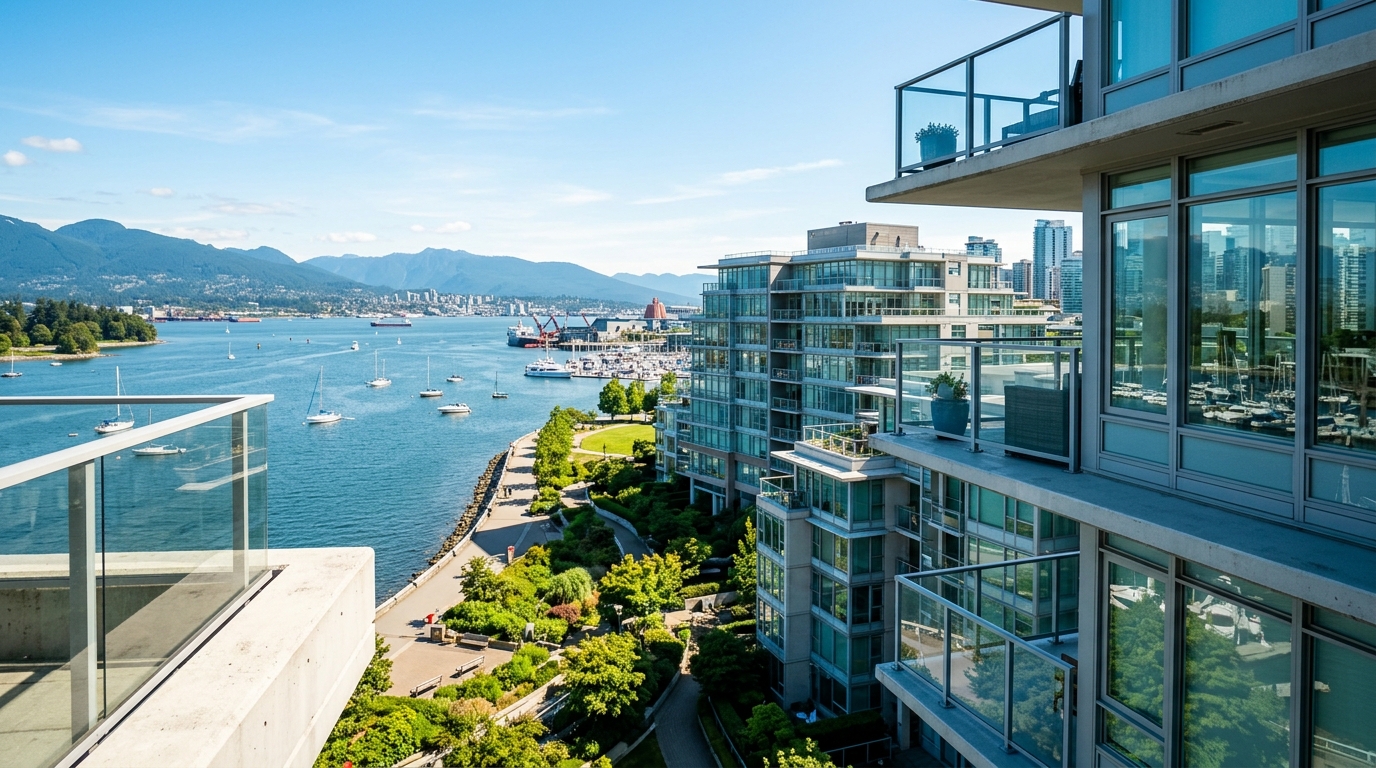
Picture a mid-rise strata building in Burnaby: 80 units, built in the early 2000s, well-managed, with no major claims history. The strata council receives its 2026 insurance renewal and exhales, as premiums remain flat—roughly in line with last year. However, buried deeper in the policy is a line that rarely makes it into council minutes: the water damage deductible has quietly climbed to $500,000.
That figure is not merely a building-level abstraction. Under Section 158 of BC's Strata Property Act, a unit owner can be held personally liable for the full amount of a strata corporation's deductible if the loss originates in their unit. If a dishwasher supply line fails at 2 a.m. and water migrates to six floors below, the strata's insurer covers the claim—but the deductible comes due first. Depending on the policy and the strata's bylaws, that liability can land entirely on the owner of the unit where the leak started.
This is the reality beneath the "insurance stabilises" narrative. While premiums are plateauing, the risk has not disappeared; it has been redistributed from annual operating costs into catastrophic-event exposure that many individual owners are unaware they carry.
How We Got Here
The past several years were difficult for strata insurance in British Columbia. The BC Financial Services Authority's 2023 strata insurance review documented average premium increases of 40 to 50 per cent over the prior three years—a compounding shock that forced strata corporations to make hard choices about budgets, special levies, and coverage levels. Some buildings in Metro Vancouver saw renewals come in at double or triple previous costs.
Insurers, facing concentrated exposure in a seismically active, flood-adjacent region with aging building stock, began repricing risk aggressively. When market pressure and regulatory attention eventually pushed premiums toward stabilisation, underwriters utilized the deductible as a lever. Rather than reducing their exposure through lower premiums alone, they shifted the floor of the risk—the first dollars of any claim—onto the insured.
The result is a two-tier risk structure. The strata corporation carries the policy and pays the premium, while the unit owner, in many circumstances, carries the deductible.
The Numbers Behind the Exposure
Water damage deductibles on older or higher-risk Metro Vancouver strata buildings can now reach $500,000 or more, according to Insurance Bureau of Canada data on BC residential strata coverage. Earthquake deductibles—typically calculated as a percentage of insured value rather than a flat dollar amount—can be materially higher on a per-unit basis.
Approximately 1.5 million British Columbians live in strata properties, making this the dominant form of housing tenure in Metro Vancouver. For investors, strata units represent a liquid segment of the market, while for owner-occupiers, they are often the only path to homeownership near transit and employment. Both groups face the same deductible exposure, yet most remain unaware of it.
The Awareness Gap
Strata managers and insurance brokers who work with BC strata corporations report a consistent pattern: councils focus on the premium line at renewal, while the deductible structure receives far less scrutiny. The Condominium Home Owners Association of BC (CHOA) has published guidance urging owners to review their strata's insurance certificate and understand deductible amounts, but awareness remains uneven across the province's roughly 30,000 strata corporations.
The practical consequence is significant: an owner who carries standard unit owner's insurance—often called "bare walls" coverage—may have a deductible liability protection limit of $25,000 or $50,000. If their strata's water damage deductible is $500,000 and they are found liable under the Strata Property Act, the gap between their coverage and their financial exposure is enormous.
The BCFSA continues to monitor strata insurance market conditions. Whether its reporting captures the full extent of deductible inflation across the 2025–26 renewal cycle—the current period of focus for many strata corporations—remains a trend worth watching.
What Strata Councils Should Do Now
The practical steps are straightforward, even if the conversations are uncomfortable:
- Review the full policy, not just the premium summary. Strata councils are entitled to the complete insurance certificate. Every deductible—water, earthquake, sewer backup, and other perils—should be extracted and documented in plain language for owners.
- Pass a deductible bylaw. Under the Strata Property Act, strata corporations can adopt bylaws that specify how deductible liability is allocated. Without a bylaw, the default provisions of the Act apply, which may not reflect owner expectations. Legal counsel familiar with strata law can assist in drafting clear, enforceable bylaws.
- Communicate actual exposure. At the annual general meeting or in a dedicated notice, councils should communicate current deductible amounts and their implications. Owners should verify that their personal unit owner's insurance includes deductible assessment coverage at a limit that matches or exceeds the strata's deductibles.
- Engage a specialist broker. Generalist brokers may not be familiar with the nuances of strata deductible structures. Firms such as Hub International and Gallagher have dedicated strata practices in BC and have discussed the deductible inflation trend in industry forums.
The Bottom Line
The stabilisation of strata insurance premiums is positive news for building budgets across Metro Vancouver, but it is only half the picture. The risk that once resided in the premium has migrated into the deductible—and from the strata corporation's balance sheet into the personal financial exposure of individual unit owners. For the 1.5 million British Columbians in strata housing, the question is no longer just "what does the building pay for insurance?" but "what am I personally on the hook for if something goes wrong?" Finding the answer before a claim is filed is the most important insurance conversation in Metro Vancouver real estate right now.



