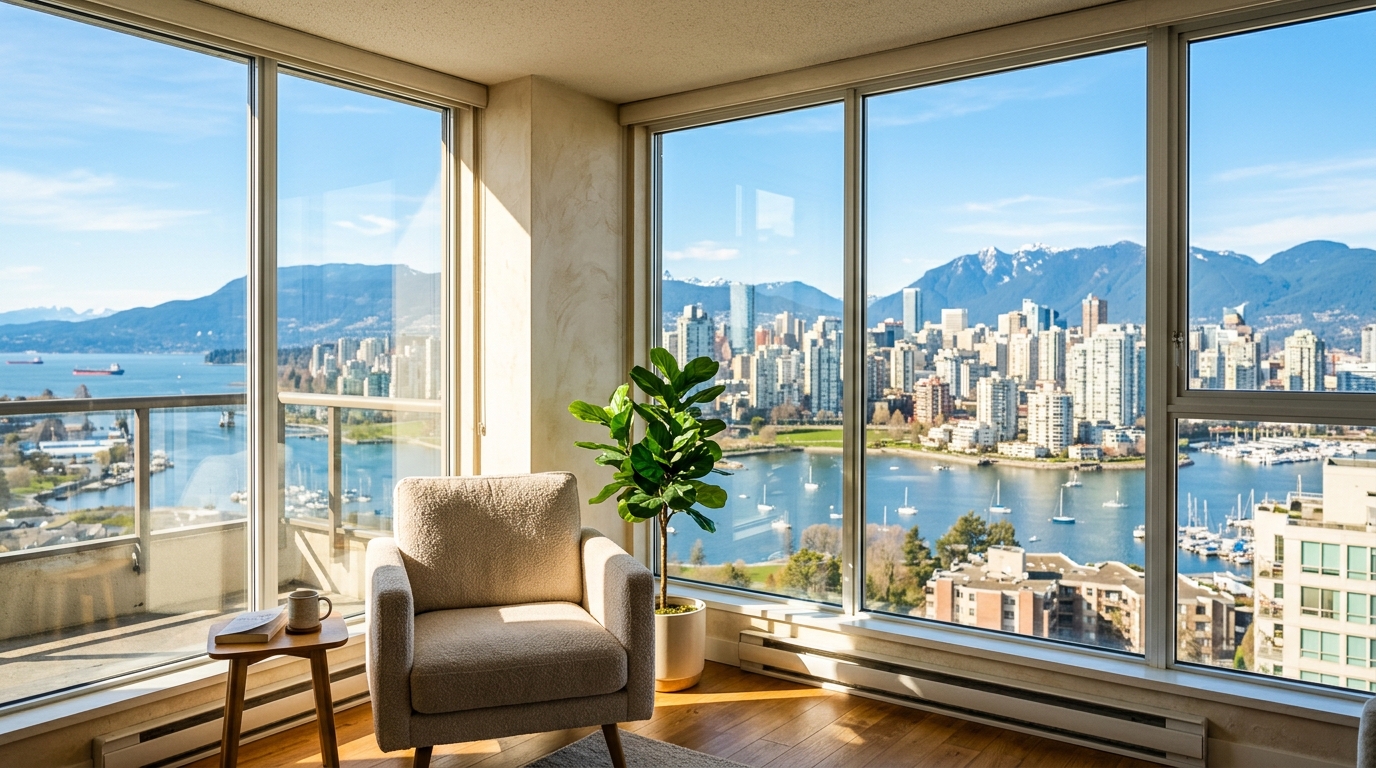
Picture a six-storey concrete building on Burnaby's Edmonds Street: flat roof, single-pane windows, and a lobby that has not been updated in decades. The strata council has been warned for three consecutive years that the building envelope requires a $2.8-million repair. Special levies are mounting. A developer has approached enough owners to convene a wind-up vote. This scenario, once considered a legal curiosity, is playing out with increasing frequency across Metro Vancouver in 2025 and 2026.
The mechanism driving this trend is a 2016 amendment to BC's Strata Property Act, which lowered the supermajority required to wind up a strata corporation from 100% to 80% of voting owners. The change was intended to facilitate the redevelopment of aging buildings in high-demand urban areas. Several years later, the pipeline is active and accelerating, impacting owners, developers, and planners.
Data from the BC Land Title and Survey Authority shows that strata wind-up applications in Metro Vancouver have risen sharply in the 2024–2025 period compared to the previous five-year average. Specialists attribute this to two factors: a growing cohort of buildings reaching the 40-to-50-year mark where deferred maintenance becomes financially unsustainable, and a constrained land-supply environment that encourages developers to navigate the complexities of court-supervised wind-ups to secure transit-adjacent sites.
How a Wind-Up Works
The process is more structured than a typical land assembly. Once 80% of strata lot owners vote in favour of dissolution, the corporation must apply to the BC Supreme Court for approval. The court evaluates whether the process was fair, whether dissenting owners are adequately compensated, and whether the wind-up serves the interests of the strata as a whole. Court approval is not automatic, and judges have rejected applications where valuation methodologies were disputed or where vulnerable owners appeared inadequately protected.
From the initial vote to project completion, the timeline typically spans 18 to 36 months, depending on court scheduling, municipal rezoning, and potential challenges from dissenting owners. While this timeline has compressed as the legal community gains experience, it remains one of the more protracted land-assembly pathways in BC.
Per-unit payouts in recent Metro Vancouver wind-ups have generally carried a premium above BC Assessment values, reflecting land scarcity and the need to compensate owners for the disruption of a forced sale. Owners should treat early-stage figures as opening positions rather than settled valuations.
The Developer Calculus
For developers, strata wind-ups solve the issue of finding developable land in amenity-rich neighbourhoods where lot-by-lot assembly is often blocked by fragmented title. A single strata corporation can deliver a consolidated parcel with a known title history, bypassing the decade-long process often required for conventional single-family lot assembly.
The Urban Development Institute Pacific has noted growing developer interest in these opportunities, particularly in municipalities that have upzoned corridors near SkyTrain stations under provincial transit-oriented development legislation. A 1970s low-rise strata sitting on a site that now permits 12 to 20 storeys under BC's Transit-Oriented Areas legislation represents a different economic proposition than it did five years ago. The widening gap between existing use value and redevelopment potential often funds the premiums that make wind-up votes achievable.
What It Means for Owners
For strata owners, the situation is complex. Long-term residents—many of whom are retirees—face a liquidity event that may not align with their personal financial planning. The payout can be substantial, but it arrives with tax consequences that require professional guidance.
Principal residence owners may qualify for the principal residence exemption on capital gains, but investors and rental-unit owners face full capital gains exposure on appreciation above their adjusted cost base.
The Condominium Home Owners Association of BC (CHOA) urges owners to obtain independent legal and tax advice before any wind-up vote. By the time a vote is called, a developer's valuation methodology is often already embedded in the proposal, and early engagement allows owners to better negotiate terms or challenge appraisals.
Relocation is also a significant concern. In a rental market where vacancy rates remain near historic lows, displaced owner-occupiers and tenants face difficult re-entry. While some agreements include right-of-first-refusal provisions for replacement buildings, these are negotiated rather than guaranteed.
The Neighbourhood-Level Impact
Planners at the City of Vancouver and the City of Burnaby are processing an increasing number of rezoning applications tied to wind-up proceedings. Concentration is highest in neighbourhoods built during the 1970s strata boom: Brentwood, Metrotown, Edmonds, Marpole, Kerrisdale, and parts of New Westminster.
The cumulative effect of these wind-ups on community social fabric is a dimension that planners and policymakers will need to monitor as the pipeline grows.
The Bottom Line
Strata wind-ups are no longer a legal edge case; they are a meaningful component of Metro Vancouver's land-supply story. For owners in pre-1985 buildings in transit-adjacent neighbourhoods, understanding this mechanism is a matter of prudent ownership. For developers, the aging strata cohort represents one of the most significant supply channels to emerge in the region in years.
What to watch: BC Supreme Court strata wind-up approvals in the second half of 2026; municipal rezoning decisions in Burnaby's Metrotown and Edmonds corridors; and potential provincial guidance on owner protection standards as application volumes rise.



