The number that matters this week: Transpacific spot container rates tracked by the Freightos Baltic Index have surged through Q2 2026. This shift reverses the relative calm of Q1 and reignites the margin anxiety familiar to BC importers. For businesses sourcing consumer goods, electronics, and light manufactured products from Asia, the focus must now shift from monitoring rising rates to executing a hedging plan.
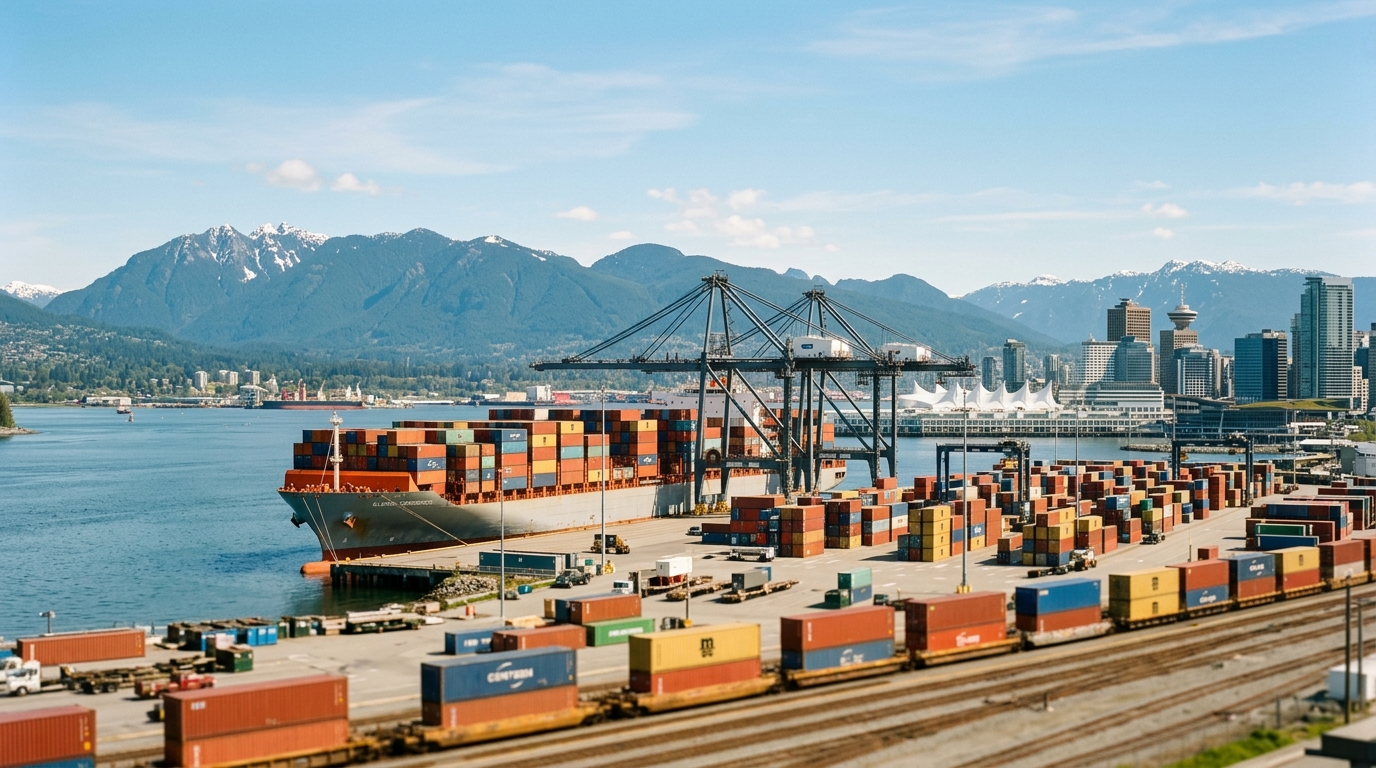
The Port of Vancouver, Canada's largest port by tonnage and the gateway for more than $300-billion in annual trade, sits at the centre of this pressure. Every container that clears Centerm or Deltaport carries a freight cost that has become increasingly difficult to predict. This volatility, rather than the rate level itself, complicates supply chain planning.
Why rates are moving
The primary driver is a familiar one: shippers are front-loading inventory ahead of anticipated US tariff escalations, creating a demand surge on Transpacific lanes that outpaces available vessel capacity. Drewry's World Container Index reflects this trend, with Transpacific rates climbing week-over-week as bookings crowd near-term schedules. This dynamic mirrors the volatility of 2024, providing a clear precedent for the urgency required today.
The structural challenge is that just-in-time sourcing models, adopted by many smaller BC importers to minimize warehousing costs, offer little buffer against spot rate spikes. Operators who book freight 30 days out now pay significantly more than those who locked in rates 90 days ago.
The bottom line
In practical terms, if you import $500,000 worth of goods from Asia each quarter using the spot market, your freight bill has risen materially in recent weeks. This cost either compresses your margin or forces a price increase for your customers—neither of which is ideal in a price-sensitive retail environment.
Who is positioned well
Effective operators share a common trait: they moved to forward contracts earlier in the year, locking in rates when Q1 softness made carriers more willing to negotiate. Larger importers with dedicated logistics teams and relationships with Non-Vessel Operating Common Carriers (NVOCCs) possess the flexibility to structure multi-month agreements. Smaller operators—the independents and mid-market manufacturers that comprise a significant share of BC's import base—remain more exposed due to lower volumes.
The Canadian International Freight Forwarders Association (CIFFA) advises that the current environment rewards operators who treat freight procurement as a financial decision. This means evaluating forward contracts not just on rate, but on the optionality they provide against further volatility.
The smart move
For BC importers on the spot market, the calculus has shifted. Export Development Canada's trade finance commentary emphasizes that periods of rate volatility are when hedging instruments and forward contracts deliver the most value—not necessarily to secure the lowest rate, but to eliminate the planning risk that threatens cash flow.
Operators should consider three steps: first, consult your freight forwarder about 60- to 90-day forward rate options while demand remains manageable. Second, if your business qualifies for BC Chamber of Commerce trade finance programs or EDC's financing tools, use them to buffer against cash flow disruption. Third, model your landed cost at current spot rates and at a 15-per-cent increase; if either scenario compromises your margin, a contract is a necessity.
What this means for Vancouver
The Port of Vancouver's throughput makes freight rate volatility a provincial economic variable. When hundreds of BC businesses face compressed import margins, the downstream effects touch retail pricing, employment in light manufacturing, and the competitiveness of BC-assembled goods. Operators who hedge effectively protect their own margins while maintaining the supply chain stability their customers depend on. In a volatile quarter, that reliability is a competitive advantage.



