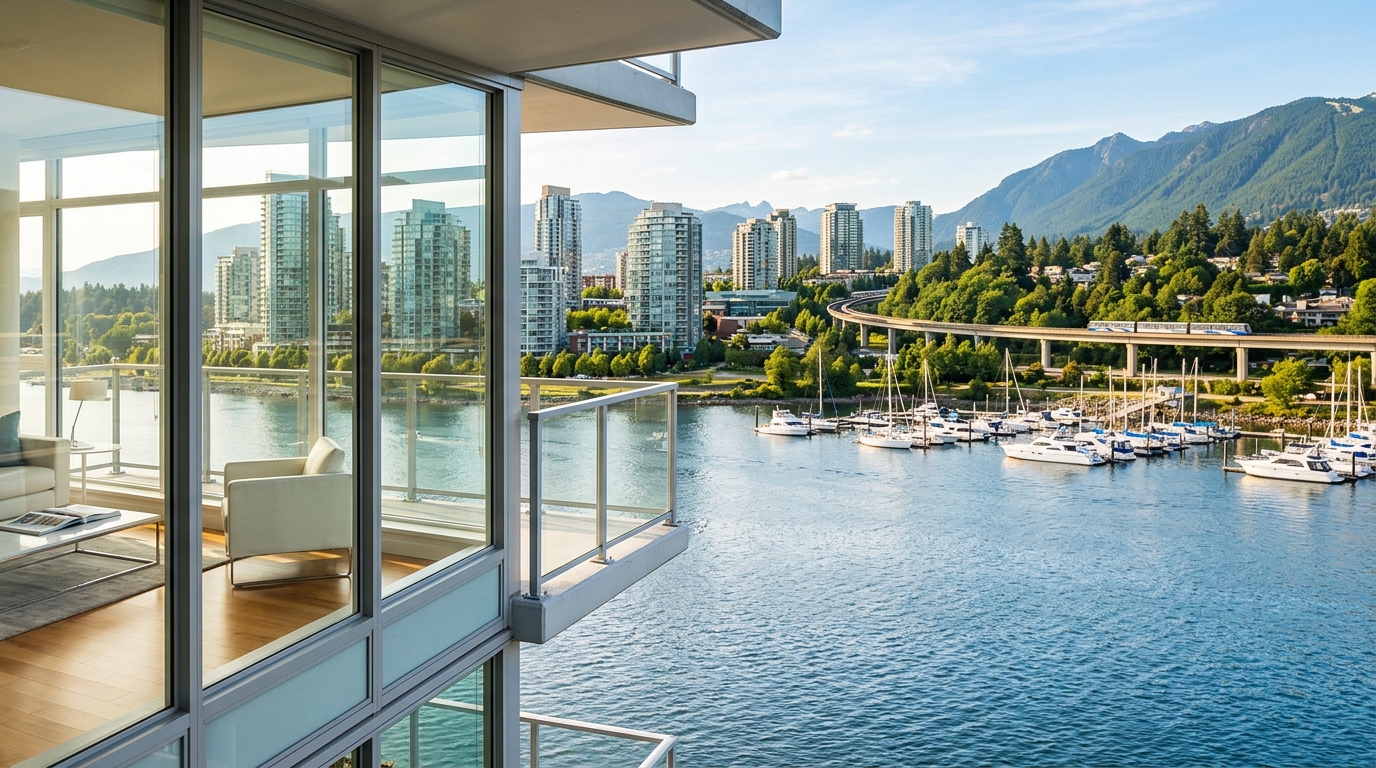
Stand at the corner of St. Johns and Murray streets in Port Moody on a Tuesday morning and you can watch the geometry of Metro Vancouver's commercial market shift. Cranes mark a waterfront mixed-use pipeline that would have seemed implausible five years ago. A few kilometres east, light-industrial bays in Port Coquitlam—the kind of flex space a growing logistics firm or specialty manufacturer requires—are still leasing at rates Burnaby tenants have not seen since 2021.
That price gap is the story. For operators and investors who watched the Broadway Subway corridor absorb a wave of capital and subsequent repricing, the Tri-Cities present something increasingly rare in Metro Vancouver: a measurable arbitrage with a ticking clock.
Timing is critical. Q1 2026 commercial market data shows industrial lease rates in the Coquitlam–Port Coquitlam submarket holding between $24 and $28 per square foot annually. This remains a significant discount to comparable Burnaby product, which trades in the $32 to $38 range, and to Richmond, where vacancy has ticked up but asking rates remain elevated near $30 to $35. For a 5,000-square-foot tenant, that spread translates to $30,000 to $55,000 in annual occupancy savings—capital that can be redeployed into headcount, equipment, or inventory.
The catalyst accelerating this shift is transit. The Evergreen Extension of the Millennium Line has expanded the labour and customer catchment for every commercial node it touches. Ridership on the segment has grown consistently since 2023, effectively shortening the distance between Coquitlam Centre and downtown Vancouver. For retailers and service operators, access to a transit-connected workforce is now a site-selection prerequisite, and the Tri-Cities—once dismissed as car-dependent—now meet that standard.
Coquitlam's commercial development pipeline reflects this momentum. Commercial permit values in Coquitlam have risen year-over-year as developers respond to demand signals the broader market is only beginning to price in. The city's planning office has prioritized mixed-use commercial density around the Lincoln and Coquitlam Central SkyTrain stations, providing tenants and investors greater confidence in the long-term character of these nodes.
Port Moody’s evolution has a different texture. The waterfront mixed-use pipeline, anchored by the Moody Centre area, is attracting boutique professional services, food-and-beverage operators, and creative-sector firms seeking character space at non-character prices. Port Moody's economic development office has positioned the waterfront corridor as a destination for this specific tenant profile, and early evidence suggests the strategy is succeeding.
For logistics and light-industrial operators, Port Coquitlam remains the most compelling near-term entry point. The city's industrial stock—largely low-rise, functional, and well-connected to the Lougheed Highway and Mary Hill Bypass—offers the flexibility required by last-mile delivery operators and regional distributors. Submarket data from commercial brokerages shows vacancy rates that, while tightening, still offer optionality that Burnaby's near-zero industrial vacancy cannot match.
The convergence risk is real. As more operators discover this spread, it will compress. Burnaby's repricing following the Broadway Subway announcement offers a clear historical parallel: the window between "early mover" and "market rate" closed faster than most observers predicted. The Tri-Cities are not at that inflection point yet, but the leading indicators—increased transit ridership, rising permit activity, and growing broker attention—are accumulating.
For businesses with flexible site requirements, the case for acting in the next two to three leasing cycles is strong. For investors, the opportunity lies in identifying well-located light-industrial and mixed-use assets in Coquitlam and Port Coquitlam before institutional capital formalizes its interest.
The Tri-Cities are not a secret, but they are not yet priced like a discovery. Sub-$30 industrial lease rates, a maturing SkyTrain catchment, and active municipal support for commercial density create a clearly defined geographic arbitrage. The window is open; history suggests it will not stay that way.
What to watch next: Q2 2026 vacancy data for the Coquitlam Centre and Moody Centre nodes; rezoning decisions affecting the St. Johns Street corridor in Port Moody; and TransLink’s next ridership release for the Evergreen Extension.



