The arithmetic of BC’s deep-tech sector is clear: the province’s two flagship research universities are producing more spinout companies and provisional patents than at any point in their histories, yet the federal funding infrastructure designed to support those companies has not scaled to match this growth. The result is a widening gap between the innovation emerging from BC’s labs and the capital available to commercialize it.
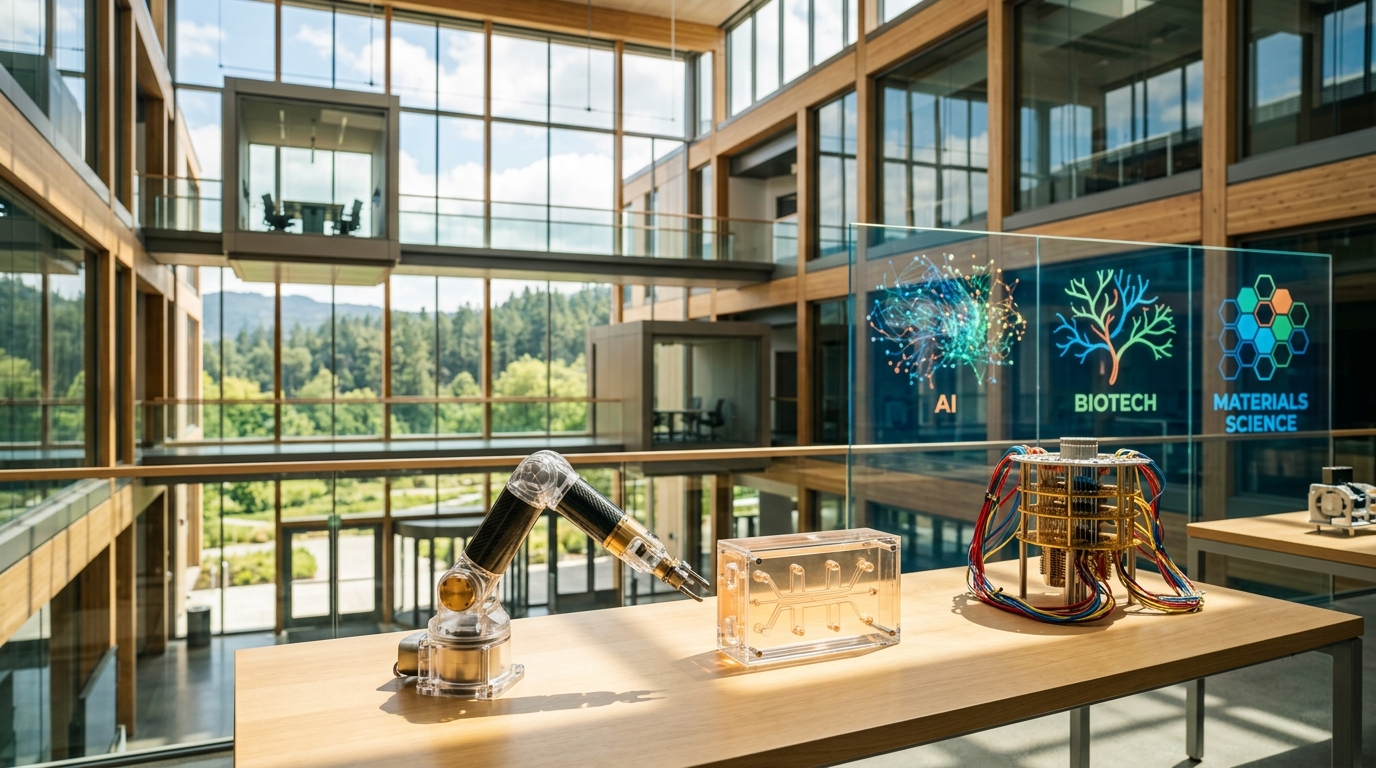
The volume of activity is significant. UBC’s University-Industry Liaison Office has reported preliminary record spinout formation activity in fiscal 2025–26, driven by clusters in artificial intelligence, therapeutic biotech, and advanced materials. SFU Innovates and VentureLabs have logged a comparable surge in provisional patent filings year-over-year. The pipeline is full; the challenge lies in the transition to market.
Between a provisional patent filing and the moment an institutional venture fund writes a cheque, a spinout typically requires between $500,000 and $2 million in pre-seed capital to conduct proof-of-concept studies and build a commercial case. This period, often referred to as the “valley of death,” is where federal programs like NSERC’s Idea to Innovation (I2I) grant and NRC’s Industrial Research Assistance Program operate. However, application volumes have consistently outpaced available funding, leaving many viable projects unfunded.
When a spinout cannot secure domestic bridge capital, its founders face a binary choice: license the intellectual property to a better-capitalized foreign acquirer or watch the company dissolve before reaching a Series A round. A significant share of BC university IP has historically flowed south through licensing arrangements rather than being built into locally headquartered companies. With the current quality of research, this leakage is increasingly costly.
Angel networks and family offices have attempted to bridge this gap. The National Angel Capital Organization’s BC chapter has tracked increased activity in deep-tech deals over the past 18 months. While this capital is valuable, it is often unevenly distributed, favouring founders with existing networks over first-time academic entrepreneurs.
The BC Tech Association has identified this pre-seed gap as a priority, and Genome BC provides targeted support for life sciences. However, sector-specific programs cannot replace a robust horizontal infrastructure.
To address this, three measures could move the needle: expanding the NSERC I2I envelope to match application volume, establishing a BC-specific matching program for angel investments, and resourcing university commercialization offices to provide hands-on venture-building support. BC is producing world-class research; the scaffolding around it must now catch up to ensure these companies are built here.