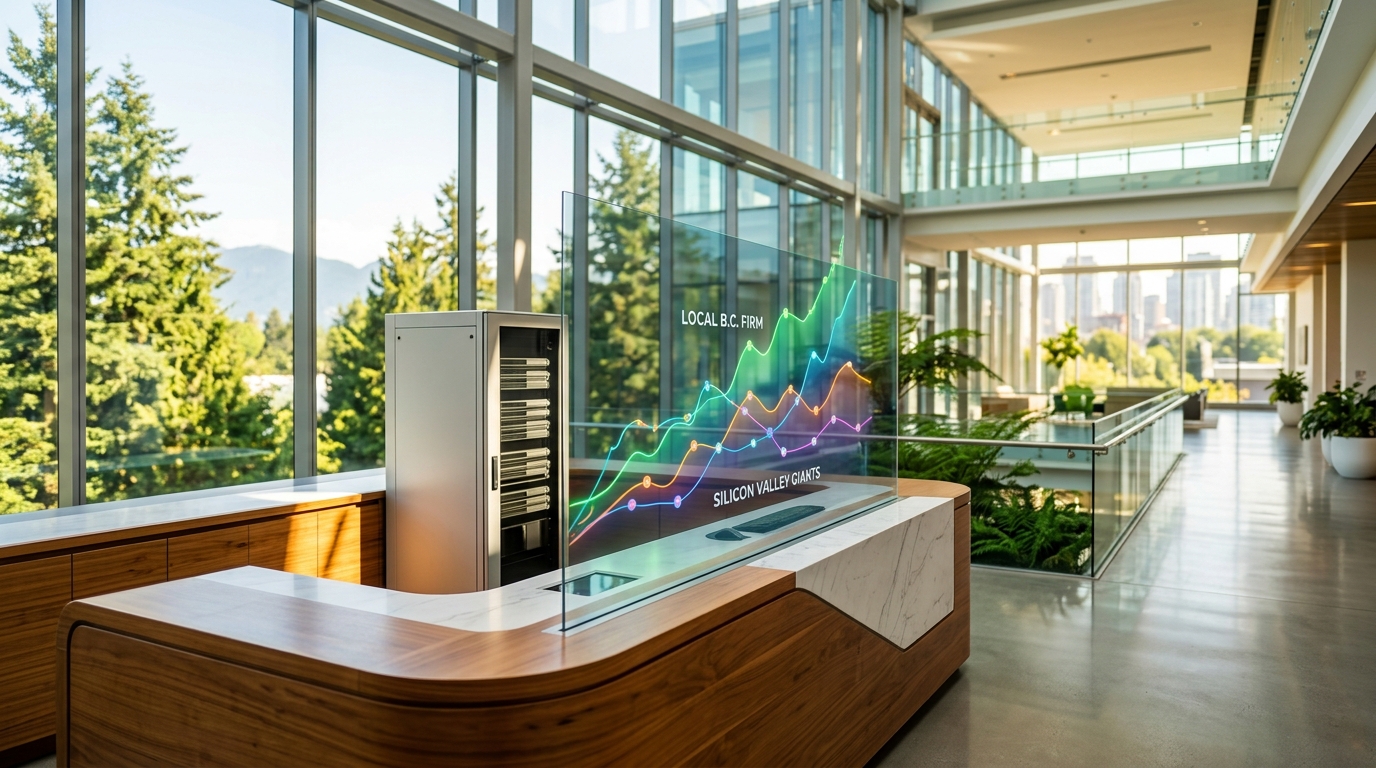
Vancouver offers a compelling case for AI infrastructure investors: affordable hydroelectric power, a temperate climate that reduces cooling costs, high-speed fibre connectivity to the Asia-Pacific region, and a deep pool of tech talent. However, this narrative is increasingly hitting a significant hurdle. BC Hydro’s large-load interconnection queue now runs approximately 48 months—four years from application to energization—quietly stalling deals that regional economic development agencies have spent years cultivating.
At least three data centre projects in Metro Vancouver and the Fraser Valley are currently stalled at the pre-application stage, unable to secure the queue positions required to make construction financing viable. Hyperscalers and co-location operators are evaluating the 48-month horizon and redirecting capital elsewhere.
The primary competitive challenge is the speed of grid access. Alberta’s electricity system operator, AESO, processes large-load connections in 18 to 24 months. For a company committing $500 million to $1 billion in capital, the difference between a two-year and a four-year wait is often the deciding factor in project viability.
The broader market context intensifies the urgency. IDC Canada projects the Canadian data centre market will exceed $10 billion in capital investment by 2028, driven by AI training and inference workloads. This capital is mobile and will flow to jurisdictions that can deliver power on schedules aligning with construction and lease commitments.
BC Hydro acknowledges that demand from electrification—including industrial growth, EVs, and heating—is straining its connection capacity. The challenge is not a lack of generation; BC’s hydroelectric system typically holds surplus energy. The constraint lies in transmission and distribution infrastructure: the physical wires, substations, and switching equipment required to connect new loads. BC Hydro is currently managing a queue that has expanded faster than its project delivery capacity.
The Ministry of Energy, Mines and Low Carbon Innovation has signalled awareness of data centre demand as a policy consideration, though no specific queue acceleration program for AI infrastructure has been announced. This gap between economic ambition and the current regulatory toolkit is where Vancouver’s competitive advantage is eroding.
Some developers are pursuing behind-the-meter generation—building dedicated assets like gas peakers, fuel cells, or battery systems to bypass the BC Hydro queue. While this offers a workaround, it is significantly more expensive and presents reputational complications for hyperscalers with strict net-zero commitments.
Alberta’s deregulated market, paired with shorter connection timelines, has attracted a string of data centre announcements in the Calgary and Red Deer corridors. While Alberta’s grid is more carbon-intensive than British Columbia’s, the ability to generate revenue two years earlier serves as a powerful counterargument for investors.
For regional bodies like Invest Vancouver, the strategic question is urgent. The region has marketed itself on land availability and power costs, but that pitch requires a credible solution to the interconnection bottleneck. Without one, Vancouver risks becoming a case study in how strong fundamentals can be undermined by utility constraints.
Accelerating the queue will require either increased project delivery capacity—which would need to be recovered through rates—or a policy decision to prioritize specific load types, which involves tradeoffs with broader electrification goals. The cost of inaction is already visible: capital that could anchor Vancouver’s next economic cycle is instead securing sites in Alberta.