There is a constraint in Vancouver’s AI scene that rarely makes the public discourse: you can raise the capital, hire the team, and sign the enterprise pilot, only to find you cannot run your model. GPU compute at Metro Vancouver’s major colocation facilities is booking out months in advance, and the waitlist is not shortening. For a cohort of applied AI startups that has grown rapidly over the past two years, this infrastructure ceiling is as significant as any funding gap.
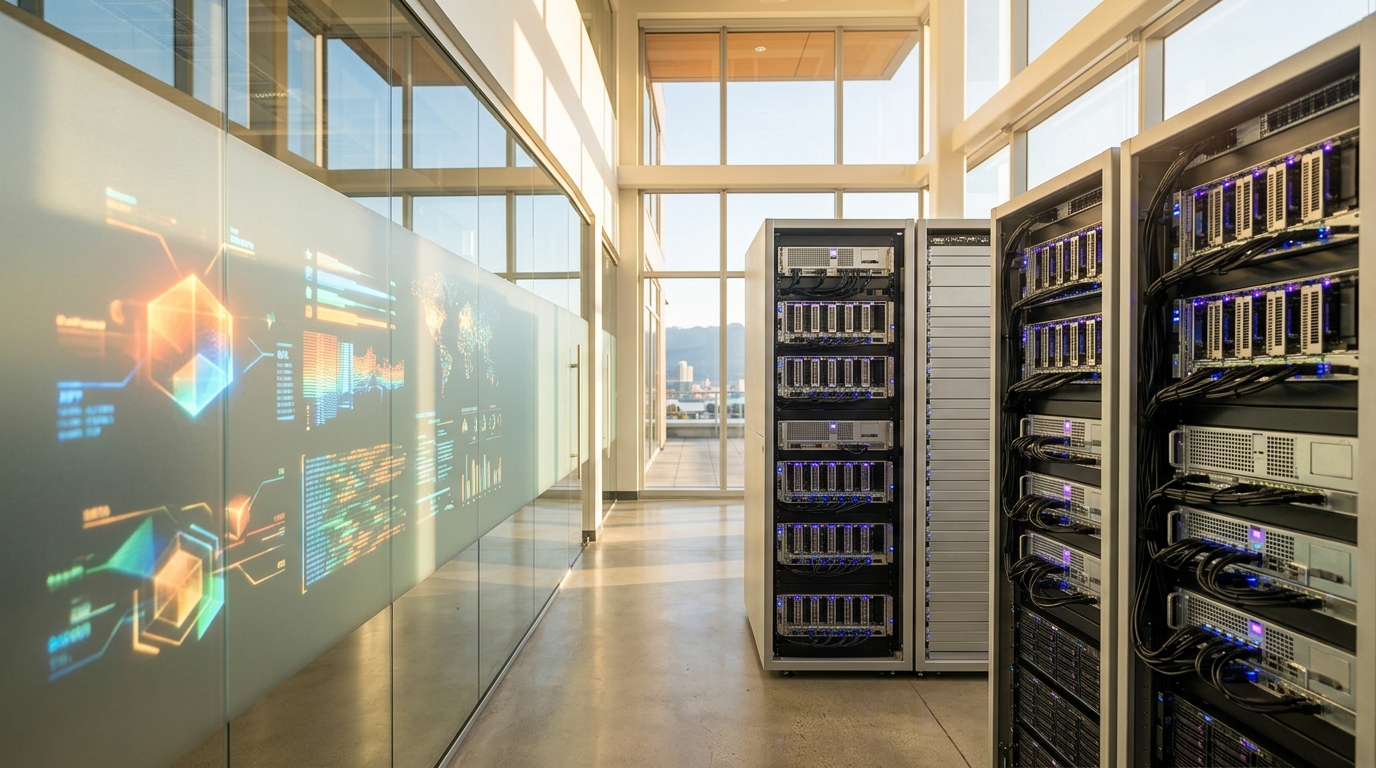
The bottleneck is structural. Vancouver’s data centre market was designed for enterprise IT workloads: reliable, predictable, and power-efficient. AI inference and training require something else entirely—dense, power-hungry, and bursty workloads that stress both physical infrastructure and energy procurement. Canada's colocation operators are racing to add GPU-dense capacity, but construction timelines run 18 to 24 months. Demand has arrived faster than the concrete could be poured.
The numbers reflect this shift. Cologix, which operates one of Vancouver's largest carrier-neutral facilities, has seen utilization rates climb as AI workloads displace traditional enterprise tenants. Industry estimates suggest Metro Vancouver's purpose-built AI compute capacity could be absorbed entirely by existing waitlisted customers before new supply comes online. While the BC data centre construction pipeline shows significant square footage under development, most of that capacity will not be operational until late 2027 at the earliest.
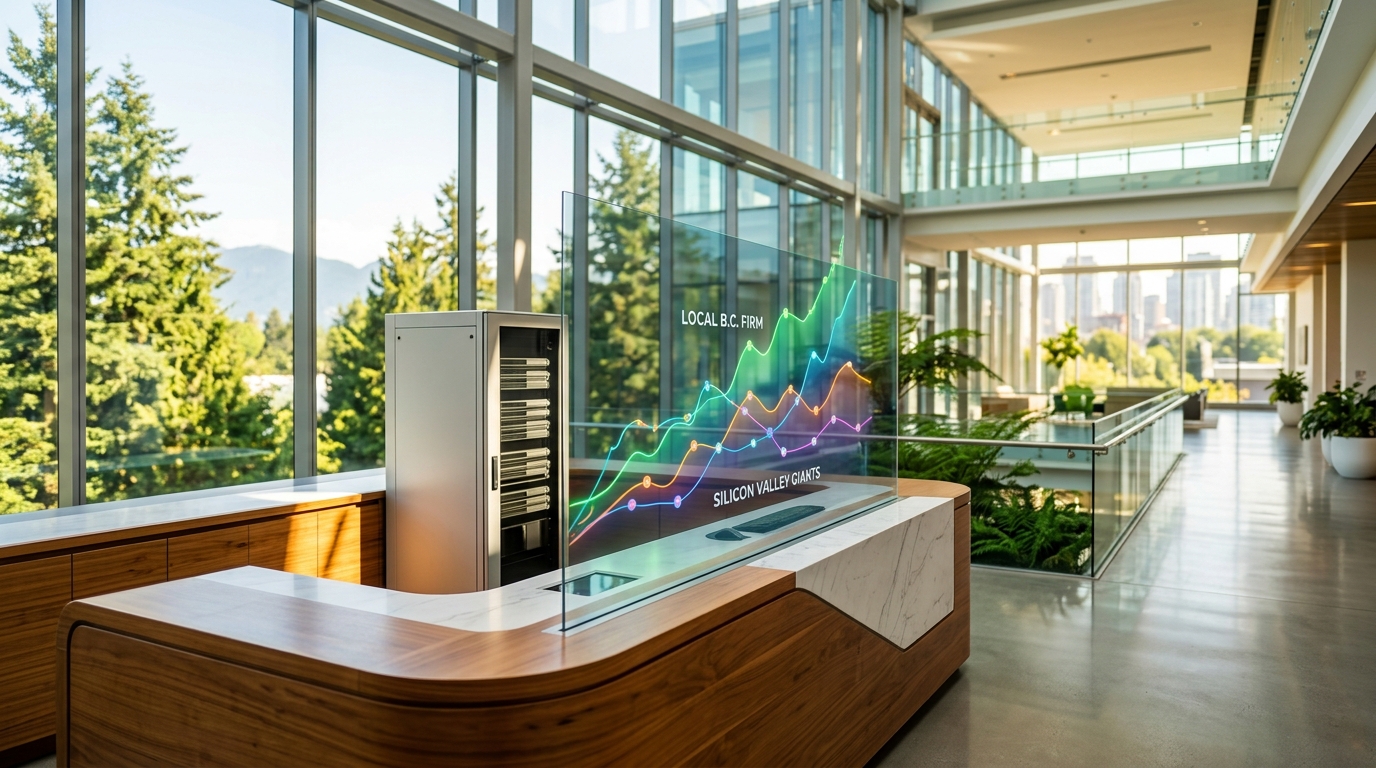
For founders, the choice is stark: wait for local capacity or pay the premium for US hyperscaler alternatives. Running GPU inference workloads on AWS or Azure's US-West regions typically costs 40 to 60 per cent more than equivalent colocation in Metro Vancouver, when accounting for total costs including power, data transfer, and reserved-instance pricing. For an early-stage company, that differential compresses runway.
Data sovereignty further complicates the US cloud option. Canadian AI companies handling health data, financial records, or federal contracts face data residency requirements that effectively rule out US infrastructure for certain workloads.
This constraint is not uniform. Toronto's market is larger and has more GPU-dense capacity coming online, as Ontario's electricity grid has supported faster large-scale builds. Seattle, Vancouver's most direct competitor for talent and capital, benefits from proximity to AWS. CDL-Pacific's applied AI cohort has noted infrastructure access as a friction point that Toronto and US-based peers do not face to the same degree.
The irony is that this constraint is driving revenue for the infrastructure layer. TELUS's data centre division and independent colocation operators report growth driven by AI-related demand. Pricing power for GPU-dense rack space has increased over the past 18 months. For investors, the durable value in the AI stack may currently lie in the physical facilities rather than the applications themselves.
A policy gap persists. BC lacks a provincial compute strategy or a coordinated approach to energy procurement for AI infrastructure, unlike the federal government's sovereign AI compute commitments. The BC Tech Association's most recent sector survey identified infrastructure access as a top constraint on company growth, a finding that has yet to yield a provincial response.
For founders, the path forward requires proactive planning. Infrastructure should be addressed 12 months in advance, and colocation providers should be engaged at the term-sheet stage. Founders must model the true cost of US cloud alternatives—including data residency risks—against local options. When raising capital, founders should ensure investors understand that infrastructure choices are margin decisions with significant regulatory implications.
The compute wall is real, but so is the opportunity. BC’s data centre operators are positioned to benefit from this shift.