Vancouver's creative economy is undergoing a quiet but significant transformation. While the city's film stages and game studios generate billions in annual production value and the province's interactive digital media sector employs more than 10,000 workers, a generation of locally built AI tools is beginning to automate the workflows that underpin these industries — from ad copy and asset generation to narrative design and post-production logistics.
The narrative that AI is simply replacing creative jobs is imprecise. A more useful perspective is that Vancouver has become a node in the global creative-AI supply chain. Firms that recognize this shift early will price, hire, and compete differently than those that do not.
Metro Vancouver's creative and marketing sector is a cornerstone of the region's knowledge economy. The Vancouver Economic Commission has identified these industries as vital to the city's growth, encompassing film, television, interactive gaming, and advertising. BC's film and television sector alone accounts for more than $4 billion in annual production volume, according to Creative BC.
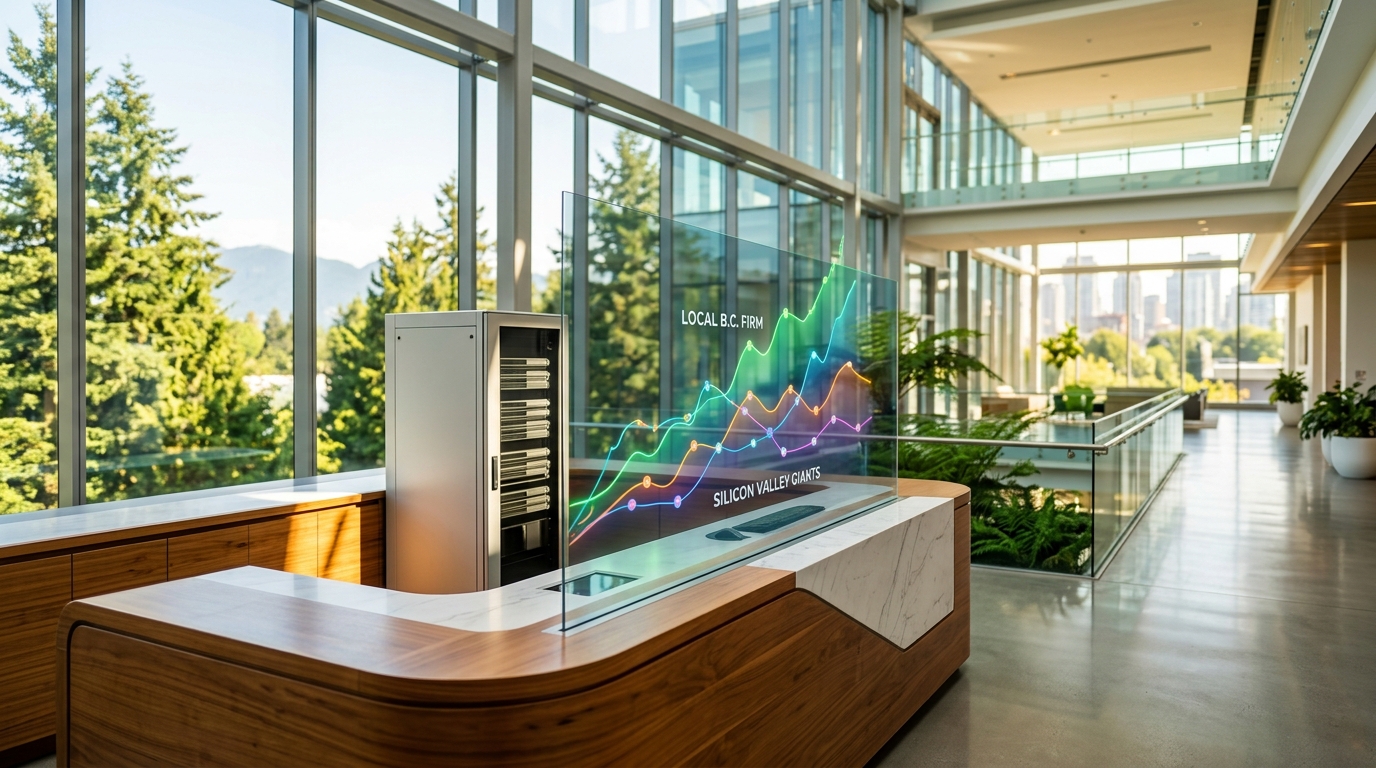
A cluster of Vancouver-based AI startups has identified the creative sector as an underserved market. Unlike broad-platform players such as Adobe Firefly or OpenAI's enterprise suite, these companies are building workflow-specific tools for agencies, studios, and production houses. The objective is to increase efficiency, allowing teams to complete complex tasks in a fraction of the time.
This shift is leading to operational compression: fewer mid-level roles, faster turnaround expectations, and downward pressure on project pricing. Industry projections suggest that agencies utilizing AI-assisted pipelines for campaign assets can significantly reduce production time compared to traditional methods. Firms that fail to adopt these tools risk losing their competitive edge.
On the startup side, BC's tech ecosystem has seen a notable increase in AI companies specifically targeting creative verticals. The pattern is consistent: founding teams with backgrounds in gaming or production, early anchor clients that validate the use case, and product roadmaps that deepen into specific workflows.
The gaming vertical is particularly active. BC's interactive digital media industry has been an early adopter of AI-assisted asset generation, narrative branching tools, and automated quality assurance pipelines. The province's concentration of mid-size independent studios makes it a natural market for B2B creative-AI tools.
Advertising is the other high-activity vertical. Metro Vancouver hosts a substantial base of independent agencies serving national and international clients. Industry sentiment suggests that these firms are adopting tools aggressively to protect margins while maintaining quality.
The next 24 months are critical as early adoption becomes standard. The global market for AI-powered creative tools is projected to grow sharply through 2027. Vancouver firms that integrate AI workflows by that time will compete on a different cost and speed basis than those still evaluating pilots.
For workers, the assessment is mixed. Roles involving high-volume, repeatable creative execution face genuine compression, while roles involving strategic direction and high-level judgment remain more durable. Creative BC has signalled awareness of the workforce transition challenge, though the pace of adoption is currently outrunning retraining infrastructure.
The opportunity is that Vancouver is positioned to be a builder in this transition. The city's concentration of creative expertise and technical talent gives local AI startups a unique advantage. A tool built in Vancouver, refined through production use, has significant export potential. The automation is here; the focus for local leaders is now on how to control and leverage it.