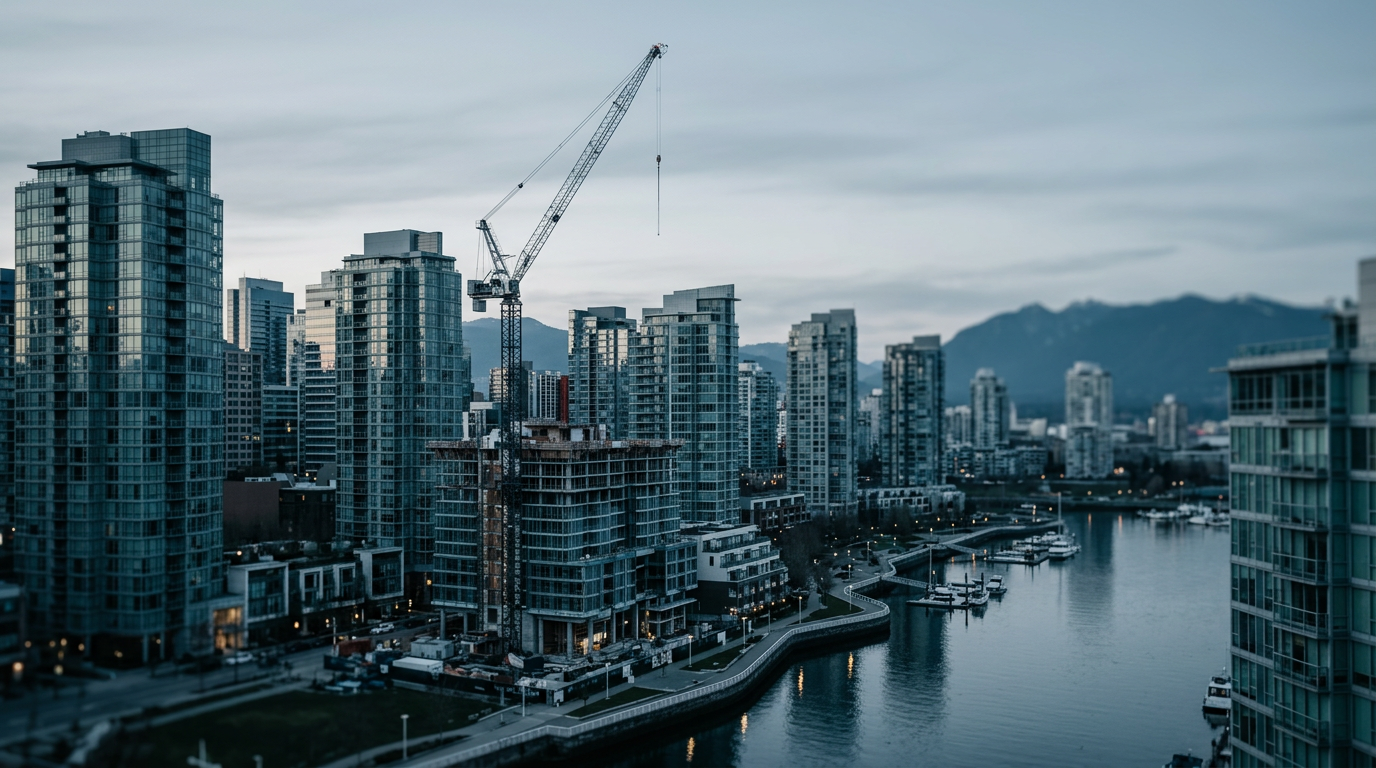
The gleaming towers of Yaletown and the heritage character homes of Kitsilano represent decades of ad-hoc development decisions across Vancouver. On Monday, that era officially ends.
City Council convenes public hearings March 10 on Vancouver's first-ever Official Development Plan—a comprehensive growth blueprint that will govern where and how the city builds for the next generation. The document is mandated under the province's Bill 18, with a hard June 30, 2026 deadline for approval.
For Vancouver's development industry, the stakes couldn't be higher. This single document will determine zoning priorities, infrastructure investment, and growth patterns that have historically evolved through piecemeal neighbourhood plans and rezoning applications.
City planning officials have described the plan as a framework that must reconcile competing demands: housing affordability, climate targets, infrastructure capacity, and neighbourhood character preservation.
The Business Impact
Real estate developers face the most immediate consequences. The ODP will establish clear rules for density, height, and land use that replace the current system of case-by-case rezoning applications. Industry representatives have pushed for certainty and streamlined approval processes, arguing that regulatory clarity will accelerate housing construction.
But community groups worry about gentrification and displacement pressures. Housing advocates have called for stronger rental protections and affordable housing requirements embedded directly in the growth framework.
The plan also addresses infrastructure bottlenecks that have constrained development. Transportation corridors, sewer capacity, and park space allocation will be mapped against projected population growth through 2050.
Political Pressure Points
The June deadline creates unusual political dynamics. Council typically deliberates major planning decisions over months or years. Now they face provincial penalties if Vancouver misses the legislated deadline.
Monday's public hearing represents the community's primary opportunity to influence the plan before final adoption. Planning staff have scheduled multiple sessions to accommodate expected high attendance from residents, developers, and business groups.
Early draft documents suggest the plan will designate growth corridors along major transit routes while preserving single-family character in established neighbourhoods. But specifics remain under wraps until Monday's formal presentation.
What Developers Need to Know
The ODP will likely establish clear density targets for different areas of the city, potentially eliminating the uncertainty that has made Vancouver development projects lengthy and expensive. Current rezoning processes average 15 months, with recent data showing timelines as low as eight months, creating carrying costs that get passed to buyers and renters.
Infrastructure levies and community amenity contributions may also be standardized under the new framework, giving developers clearer cost projections for projects.
However, the plan could also impose new requirements around climate resilience, affordable housing inclusion, and heritage preservation that add complexity to development proposals.
The Bottom Line
Vancouver's Official Development Plan represents the most significant shift in city planning governance in decades. For businesses, it promises regulatory clarity but also new constraints. For residents, it offers structured growth management but potentially accelerated neighbourhood change.
Council's decision in the coming weeks will echo through Metro Vancouver's development landscape for years to come. The June deadline means no second chances—whatever framework emerges from this spring's deliberations becomes the city's growth playbook through 2050.
Monday's hearing begins at 6:00 p.m. at City Hall, with additional sessions scheduled through March if needed.



