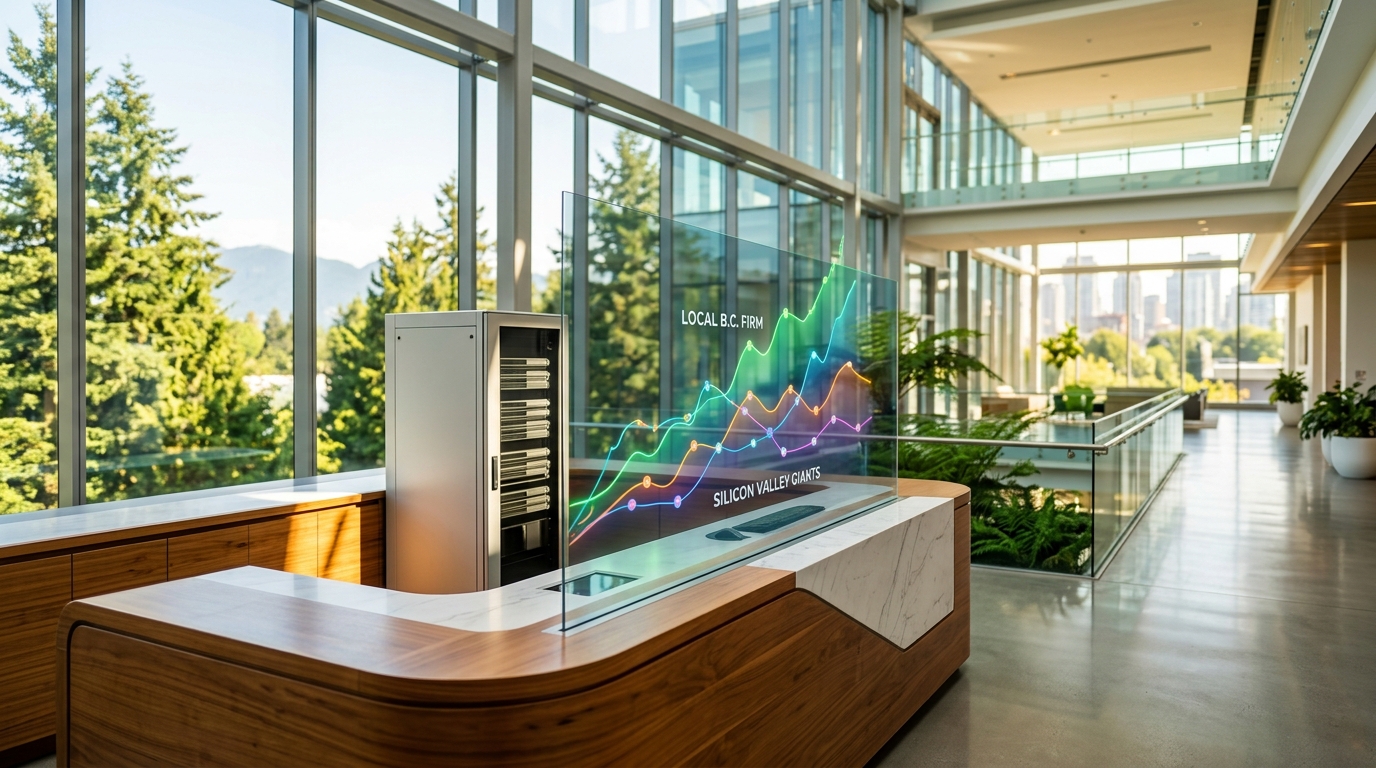
Metro Vancouver's video game sector generates roughly $4 billion in annual revenue and employs more than 20,000 workers, according to industry reports. It is one of the city's most durable tech anchors and is quietly becoming a significant player in the AI infrastructure landscape.
The core logic is straightforward. Game studios run GPU-heavy pipelines for rendering, physics simulation, and real-time engine testing. Those workloads are intensely cyclical. During crunch—the weeks before a major title ships—every card is at capacity. Between cycles, significant hardware sits idle. That idle capacity is exactly what AI labs and research teams are seeking.
GPU cloud compute for AI training currently trades at $2 to $8 USD per GPU-hour on spot markets, depending on card generation and availability. For a mid-sized studio running a rack of NVIDIA H100s or A100s at 40% utilisation outside crunch, the arithmetic is compelling. While enterprise-grade hardware like the H100 is the gold standard for AI, studios must navigate the technical reality that consumer-grade cards, often used in smaller gaming operations, face different performance constraints and lower demand in professional AI training marketplaces.
The accessibility of compute infrastructure has improved. Platforms like Akash Network or Vast.ai have made it easier for operators to list and transact compute capacity without building their own complex billing and provisioning stacks. The friction is lower than it has ever been.
Why Vancouver studios are well-positioned
Vancouver's game cluster is dense. Creative BC's studio directory captures the breadth of it: EA Vancouver, Ubisoft Vancouver, Relic Entertainment, and dozens of independent operations. These studios built this capacity for their own workloads, meaning the marginal cost of leasing idle cycles is low once the contractual and compliance framework is in place.
The global demand signal is clear. IDC projects global demand for GPU compute capacity will grow at a 35% compound annual rate through 2028, driven by large language model training and enterprise fine-tuning. That supply-demand gap is the arbitrage opportunity Vancouver studios are positioned to exploit.
The model works best for studios that can offer predictability. AI training runs—particularly the multi-day, distributed jobs that foundation model teams run—need guaranteed capacity windows. Studios with disciplined production calendars can credibly offer those windows, leasing compute with confidence before reclaiming it on schedule.
The broader BC replication case
The game studio angle is the most visible, but the logic applies across BC's asset-heavy tech sector. Visual effects houses, post-production facilities, and scientific computing operations at BC's research universities run similar GPU pipelines with similar utilisation curves. That capital stock is now an asset class in its own right—one that the AI compute boom has made liquid.
The compliance picture is critical. Leasing compute to AI training workloads raises questions about data handling, network segmentation, and contractual liability. Studios that have moved on this have generally done so through intermediary platforms that handle the provisioning layer, keeping client workloads isolated from studio systems. That architecture is essential for both security and IP protection.
What smart operators do next
For BC tech firms sitting on GPU capacity, the immediate action is an honest utilisation audit. What is your average GPU utilisation over a rolling 90-day window? If the answer is anything below 70% for sustained stretches, the economics of compute leasing are worth modelling. The second step is marketplace evaluation. Pricing, contract terms, and provisioning flexibility vary significantly, and the spot-versus-reserved dynamic means operators who can offer longer windows command better rates.
Vancouver's game studios stumbled into this opportunity because they built infrastructure for one purpose and found it had a second use. For BC's broader tech sector, the question is whether they recognise the asset they are already holding before someone else builds a data centre next door to compete for the same demand.