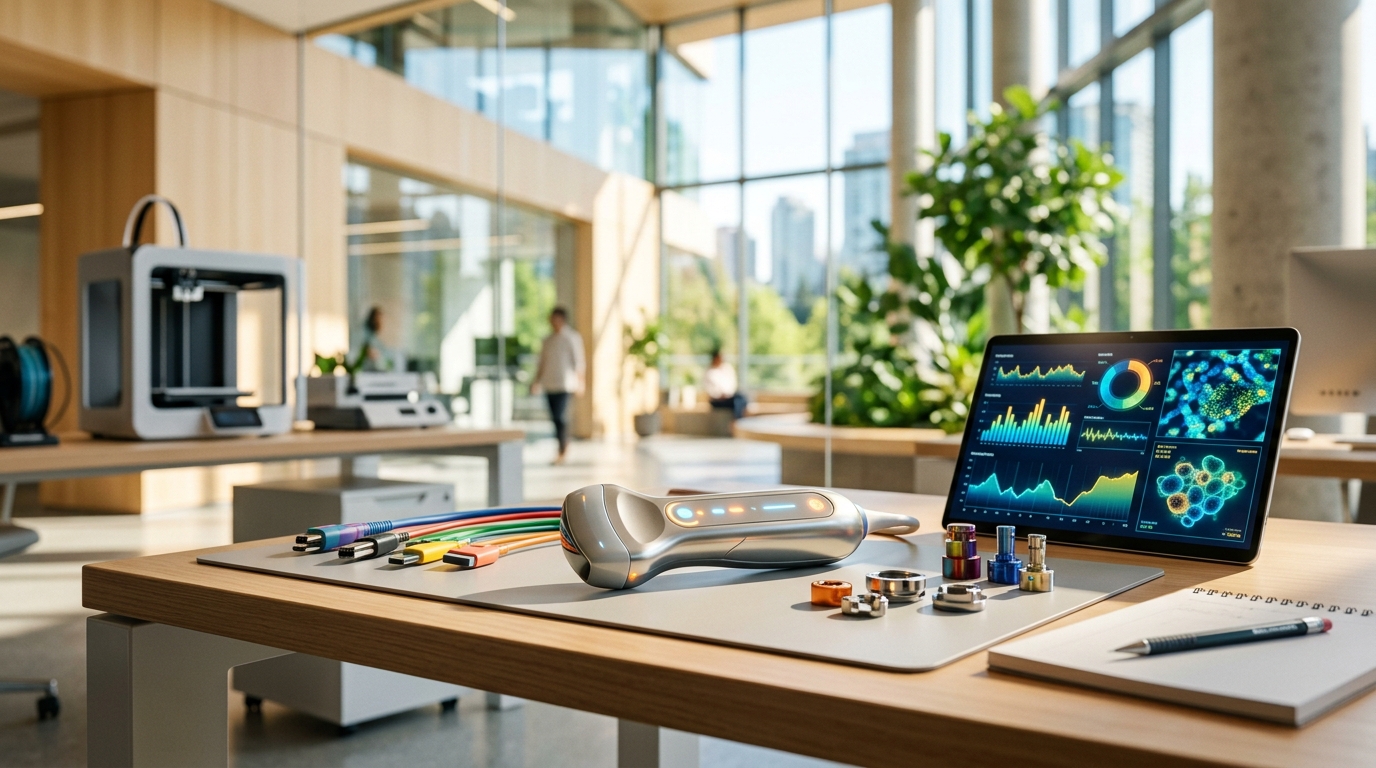
BC’s life sciences sector employs approximately 20,000 people and generates over $4 billion in annual revenue, according to provincial data. The fastest-growing sub-segment by headcount since 2023 is not genomics or biotech—it is medical devices. While the province's AI software founders compete for the same Series A dollars, a quieter cohort is building something more durable: hardware.
The cluster is concentrated in wearable diagnostics, surgical robotics, and remote patient monitoring. These categories rely on physical products, regulatory clearance, and clinical data to create moats that software alone cannot replicate. Several Vancouver-area companies are now running dual regulatory tracks, pursuing Health Canada Class II and III device licences while simultaneously filing for FDA 510(k) clearance. This dual-track approach is a deliberate commercialisation strategy, allowing firms to unlock the US and Canadian markets in a single window and compress the timeline to revenue.
Why hardware wins on stickiness
The business case for hardware-anchored medtech is straightforward. A hospital system that integrates a surgical robotics platform into its operating room workflow rarely churns. A cardiology clinic whose diagnostic workflow relies on a specific wearable ECG device is unlikely to switch vendors based on subscription pricing. The switching costs are clinical, operational, and regulatory. Deloitte's 2026 Global MedTech Pulse survey highlights this shift: acquirers are prioritising AI-integrated diagnostic hardware because the revenue is more defensible than that of pure software.
This stickiness is reflected in global M&A activity. Global medtech M&A deal value reached US$45 billion in the first half of 2026, with major players like Johnson & Johnson MedTech, Medtronic, and Stryker actively hunting for AI-integrated hardware. A 510(k) clearance or a Health Canada Class III licence serves as a significant valuation event, signalling that a company has overcome the highest-friction barrier in commercialisation.
BC's regulatory momentum
Health Canada processed a record number of Class II medical device licence applications in fiscal 2024-25, with BC firms accounting for a significant share of digital health submissions. The province has cultivated a supportive ecosystem: BCIT's Biomedical Technology program provides a pipeline of technical talent, while the National Research Council's Industrial Research Assistance Program has directed funding to BC medtech recipients across the development lifecycle.
Sophisticated firms are increasingly prioritising regulatory affairs capacity early, often hiring for these roles before expanding their software engineering teams. This focus on operational maturity is a key indicator for investors evaluating the sector.
The investor calculus
For investors navigating the compressed valuations of the AI software market, medtech offers a differentiated entry point. Regulatory milestones provide objective, third-party-validated inflection points. A Class III licence or 510(k) clearance acts as formal confirmation that a product is safe and effective for human use.
MedTech Canada's BC membership continues to grow. Compared to the capital-intensive nature of pharmaceutical development, device companies offer more legible exit paths and faster timelines to revenue-generating milestones, such as first commercial sale or reimbursement code approval.
The window is open
Vancouver's medtech cluster holds a timing advantage. The combination of acquisitive global primes, active regulatory pipelines, and a specialized talent base creates a unique environment. As capital searches for technology with tangible, real-world clinical validation, the companies currently navigating Health Canada and FDA pathways are building assets that are increasingly scarce. Investors who recognize this value before the next wave of M&A activity will find themselves well-positioned.