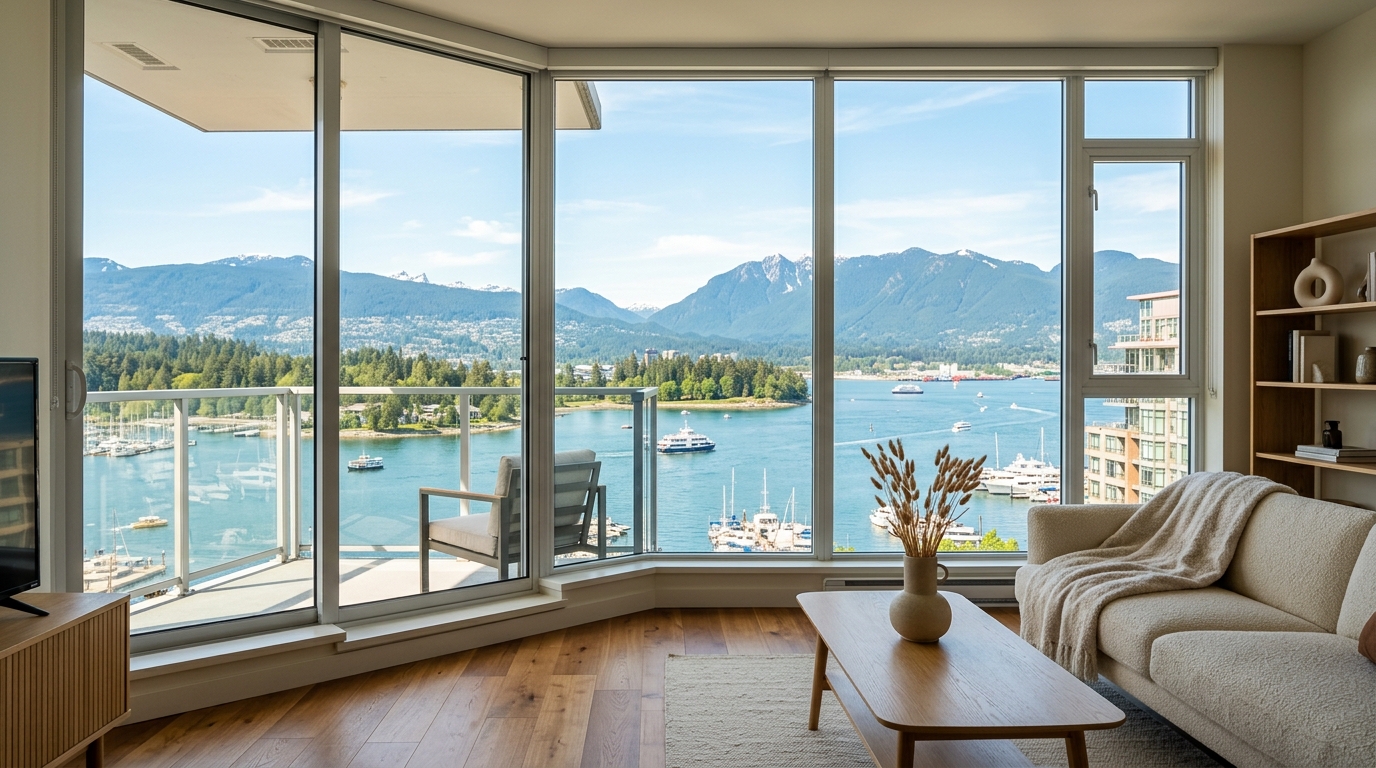
Stand at the corner of Burrard and West Georgia on a Tuesday morning and the evidence is visible: lobbies that once hummed with commuters now sit quiet behind darkened glass, with "For Lease" signs stacked on building directories. Metro Vancouver's Class B and C office market is carrying its highest vacancy rate since the early 1990s—and a growing cohort of residential developers has started to see not a distressed asset, but a door.
The shift is structural, not cyclical. Two policy instruments introduced in the past two years have materially altered the conversion feasibility equation. The first is Ottawa’s 10% accelerated Capital Cost Allowance (CCA), introduced in Budget 2024 to incentivize the creation of new purpose-built rental housing, including units created through conversion. The second is CMHC’s Apartment Construction Loan Program, which offers low-cost, long-amortization debt unavailable through conventional construction lenders. Together, they compress the per-unit cost gap between conversion and new-build—a gap that, until recently, made conversion a non-starter in most Metro Vancouver pro formas.
The vacancy backdrop is what makes those incentives land with force. Metro Vancouver's Class B and C office vacancy rate reached levels not seen since the early 1990s in Q2 2026. Sublease supply has compounded the problem: tenants locked into long-term leases before the hybrid-work transition flooded the market with shadow space, depressing effective rents and eroding the income assumptions that once justified holding costs. For owners of mid-tier office assets—the 1970s and 1980s towers that cannot compete with new AAA product on amenities, floor-plate efficiency, or sustainability credentials—the decision to hold and wait has become increasingly difficult to defend to capital partners.
The Numbers That Changed the Conversation
The conversion calculus hinges on a per-unit cost comparison. New-build residential in Downtown Vancouver currently runs between $550 and $700 per square foot in hard construction costs, excluding land and soft costs. Conversion of an existing Class B office building, which leverages the existing structure and avoids new land acquisition, has historically come in between $400 and $550 per square foot, depending on the building's vintage, floor-plate configuration, and mechanical condition.
The federal CCA incentive improves the after-tax economics. By allowing developers to accelerate the depreciation of eligible conversion costs, the incentive improves internal rates of return on projects that would otherwise sit just below viability thresholds. Paired with CMHC’s ACLP financing, the combined effect can shift a marginal project into bankable territory.
There is also a speed advantage. The City of Vancouver's rezoning backlog—a persistent constraint on new residential supply—does not apply in the same way to conversion projects. Many Class B office buildings in the Downtown core and Broadway Corridor sit within zoning envelopes that already permit residential use, or require only a streamlined change-of-use approval. For a developer who has watched a greenfield application age for years in the queue, that is a compelling operational advantage.
Where the Activity Is
Feasibility studies are concentrating in two geographies. The Downtown core—particularly the stretch of aging towers along West Hastings, Howe, and Seymour—offers the highest vacancy rates and the most motivated sellers. The Broadway Corridor is attracting different attention: the Broadway Subway's completed stations have reset land value assumptions, and several mid-rise office buildings within walking distance of new stations are being evaluated for mixed-use residential conversion, particularly where ground-floor retail can be retained.
The Urban Development Institute's Pacific region has flagged conversion as an active area of member inquiry, reflecting the volume of feasibility work underway. The first converted projects are expected to break ground before year-end, though the pipeline remains in early stages—feasibility and pre-application work rather than active permit submissions in most cases.
City of Vancouver permit data is beginning to reflect the uptick in pre-application inquiries for office conversion projects, a leading indicator that typically precedes formal submissions by six to twelve months.
What Investors Holding Office Paper Should Know
For institutional and private investors carrying Class B office assets, the conversion threshold is now a capital-allocation imperative. The traditional options—hold and re-lease at compressed rents, sell into a thin buyer pool at a discount, or demolish and redevelop—all carry execution risk or value destruction. Conversion represents a fourth path, one that monetizes the existing structure while accessing policy-subsidized financing and an accelerated tax write-off.
Key variables determining whether a building clears the conversion threshold include floor-plate depth, mechanical and electrical condition, ceiling heights, and existing zoning. Buildings that fail on one or more of these dimensions may still be candidates for partial conversion, where lower floors remain commercial and upper floors transition to residential—a hybrid model several developers are exploring along the Broadway Corridor.
The Bottom Line
Vancouver's office-to-residential conversion moment is real, but it is still early. The policy instruments are in place, the vacancy pressure is acute, and the housing need is unambiguous. What remains is execution. Watch the permit counter at the City's Development, Buildings and Licensing portal over the next two quarters. The conversion calculus has crossed a threshold; now comes the test of whether the pipeline follows.



