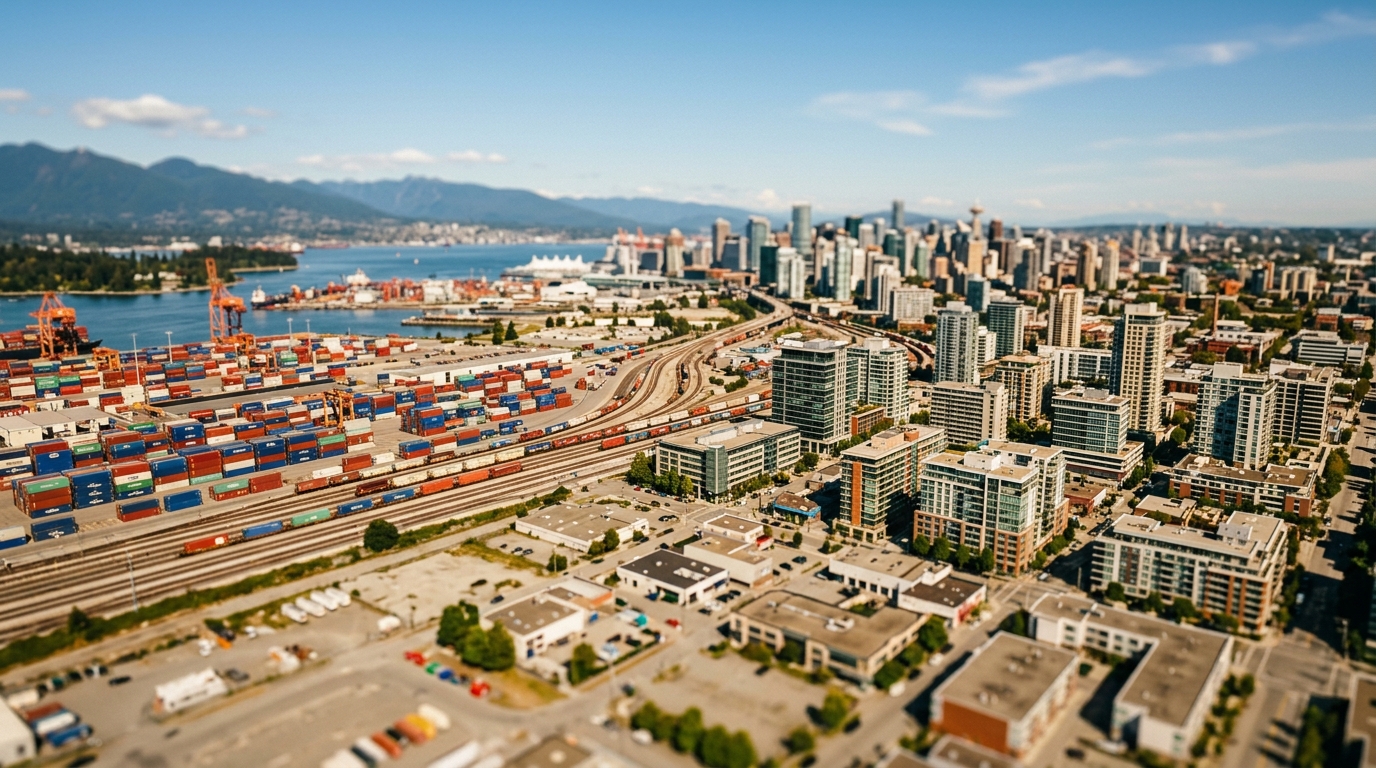
The data from Vancouver International Airport’s (YVR) cargo terminal signals a shift that transcends passenger volumes or airline schedules. It reflects a global trade system under pressure, with Canada’s primary Pacific gateway increasingly absorbing the overflow.
YVR handled approximately 280,000 tonnes of cargo in 2024, a figure climbing as shippers and freight forwarders seek alternatives to U.S. ports entangled in the economic fallout of trade tensions between Washington and Beijing. With U.S. tariffs on Chinese goods altering the economics of direct trans-Pacific routing, Canadian gateways—Vancouver chief among them—are capturing volume that would otherwise bypass the region.
This is not a temporary fluctuation. It is a structural realignment, and Metro Vancouver’s logistics sector is positioned to benefit from this shift for years to come.
Why Vancouver, Why Now
Geography has long made YVR a logical Pacific gateway. The airport sits closer to Asian ports than any other major Canadian hub. Its airside infrastructure—including expanded cold-chain and pharmaceutical-grade cargo facilities—is increasingly tailored to high-value, time-sensitive, and temperature-controlled freight.
The geopolitical context has accelerated this trend. When direct U.S.-China trade routes become economically punishing, shippers seek third-country gateways that offer neutrality, reliable customs processing, and onward distribution capacity. YVR, with its direct connections to major Asian carriers and proximity to the U.S. border, fits this profile.
The Canadian International Freight Forwarders Association has tracked rising inquiry volumes from Asia-Pacific shippers exploring Canadian routing options—a pattern that accelerated through 2025 and continued into the first quarter of 2026.
The Logistics Impact
In practical terms, goods that previously flew directly from Shanghai or Seoul to Los Angeles or Chicago are increasingly routed through Vancouver. Some of this cargo serves Canadian consumers, while a growing share uses Canada as a staging point—cleared through Canadian customs, consolidated, and moved south by truck or onward by air. Every tonne moving through YVR generates demand for warehousing, cold storage, customs brokerage, drayage, and last-mile logistics, primarily within Richmond and Delta.
The Industrial Crunch
The challenge lies in the limited industrial land base adjacent to YVR. Industrial vacancy in Richmond and Delta remains below 3% as of Q1 2026, among the tightest readings in Metro Vancouver. For existing operators with YVR-adjacent space, this creates a significant negotiating advantage. For new market entrants, it presents a formidable barrier.
The BC Trucking Association has identified drayage capacity as a parallel constraint. Moving cargo efficiently from YVR’s airside to nearby warehouses and then south to the U.S. border requires trucks, drivers, and dispatch infrastructure—all of which remain in short supply across the Lower Mainland.
Strategic Opportunities
The current opportunity is time-sensitive. Businesses that establish YVR-adjacent capacity now—particularly in cold-chain storage, customs brokerage, and third-party fulfillment—are positioning themselves to capture durable volume. Cold-chain is especially notable; the categories flowing through YVR, such as pharmaceuticals and perishable food products, rely on the supply-chain neutrality and regulatory credibility that Canada offers.
Richmond’s economic development office has identified logistics as a priority sector, acknowledging that the industrial base is a constrained resource as demand intensifies.
For customs brokers and freight forwarders, the moment is equally critical. Shippers new to Canadian routing require local expertise regarding Transport Canada air cargo regulations, Canada Border Services Agency (CBSA) processes, and the operational rhythms of YVR’s cargo terminal. Firms that provide this expertise can build long-term client relationships that outlast specific tariff regimes.
The Durability Question
While some question whether this volume will remain if U.S.-China trade tensions ease, historical precedent suggests that once shippers establish new supply chains—including carrier relationships, customs brokers, and warehousing—they rarely abandon them entirely. The friction of switching back is significant. Volume arriving at YVR in 2025 and 2026 has a reasonable probability of remaining, provided operators can secure the necessary infrastructure to support it.



